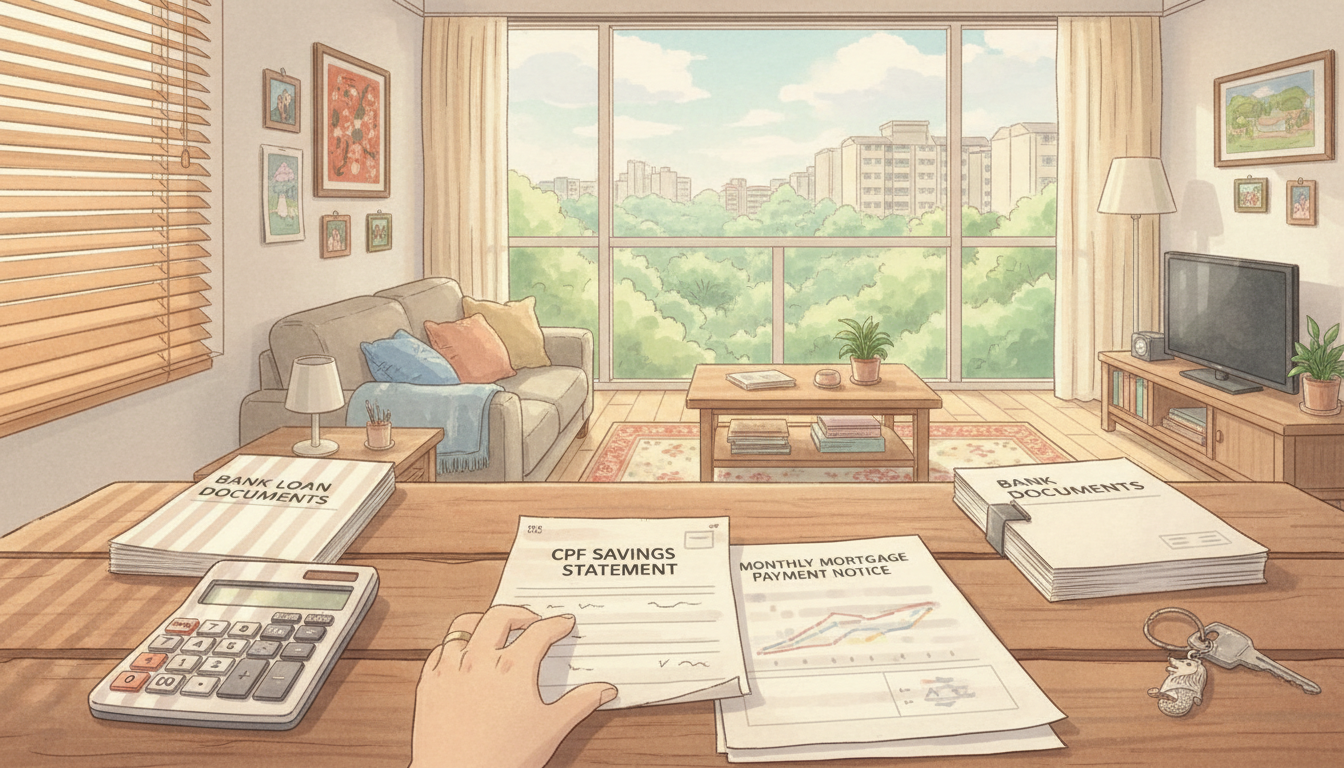
CPF withdrawal limits for property in Singapore determine how much of your CPF Ordinary Account (OA) you can safely use for your home purchase and monthly instalments, based on rules set by CPF Board and HDB. Understanding these limits early helps you avoid hitting a CPF cap mid-way through your mortgage and ensures you keep enough savings for retirement while planning your purchase through Homejourney.
What Are CPF Withdrawal Limits for Property? (Quick Answer)
In simple terms, CPF withdrawal limits for property are ceilings on how much CPF OA you can use on a single property, defined mainly by two concepts:
- Valuation Limit (VL): The maximum CPF you can use is generally capped at the lower of the property's purchase price or market valuation at the time of purchase.
- Withdrawal Limit (WL): A higher lifetime ceiling, usually up to 120% of the Valuation Limit for many bank-financed properties, covering both principal CPF withdrawn and the accrued interest you must refund when you sell.
These limits interact with other rules such as property type (HDB vs private), remaining lease, loan type (HDB loan vs bank loan), and whether you have set aside your Basic or Full Retirement Sum. Homejourney’s mortgage tools help you model these limits together with your loan size so you can choose a safe financing structure.
How CPF Withdrawal Limits Fit into Your Overall Home Financing Plan
This cluster guide focuses specifically on CPF withdrawal limits for property, and connects back to Homejourney’s broader pillar content on CPF & mortgage planning: CPF Withdrawal Limits for Property: Homejourney 2026 Guide , CPF vs Cash for Mortgage: Smarter Choices with Homejourney , and 5 Strategies to Optimize Your Mortgage with CPF | Homejourney .
In practice, your CPF usage decisions sit alongside:
- Loan type (HDB vs bank), interest rate structure, and TDSR/MSR limits.
- Cash flow planning for downpayment, instalments, and emergency buffers.
- Retirement adequacy and CPF accrued interest obligations when you eventually sell your property.
Homejourney helps you bring these pieces together by letting you compare rates from DBS, OCBC, UOB, HSBC, Standard Chartered, Maybank and more via our mortgage calculator and loan request flow at Mortgage Rates . You can then test different CPF vs cash mixes before committing.
Key CPF Housing Concepts You Must Know
Before diving into limits, it is crucial to understand the core terms you will see on the CPF and HDB websites:
- CPF Ordinary Account (OA): The only CPF account that can be used for housing-related payments such as downpayment, monthly instalments, Buyer’s Stamp Duty (BSD), ABSD, and certain legal fees.
- Valuation Limit (VL): Defined as the lower of the property’s purchase price or its market valuation at the time of purchase. CPF usage is generally capped at this amount unless you meet retirement sum requirements.
- Withdrawal Limit (WL): The maximum total CPF OA (including accrued interest) that can be used for the property, commonly set at up to 120% of the VL for private properties and HDB flats financed with bank loans, subject to retirement sum conditions.
- Remaining Lease & Age 95 Rule: CPF usage is tied to whether the property’s remaining lease can cover the youngest buyer using CPF until age 95. If it does, you can typically use more CPF; if not, usage is pro-rated.
- Basic Retirement Sum (BRS) / Full Retirement Sum (FRS): Minimum CPF savings you must set aside to protect retirement adequacy before using CPF beyond certain limits. For 2026, published BRS and FRS figures apply; for example, some guides reference a BRS around $110,200.
According to CPF Board, once you reach age 55, you can only use CPF OA for housing after setting aside the required BRS or FRS, making it essential to plan long before that age.
CPF Withdrawal Limits by Property Type and Loan Structure
CPF withdrawal limits work differently depending on whether you buy an HDB flat or private property, and whether your loan is from HDB or a bank.
HDB Flats – New and Resale
For many buyers, CPF rules feel most generous for HDB flats, especially with an HDB concessionary loan:
- HDB flat with HDB loan: You can typically use up to 100% of your available CPF OA for downpayment and monthly instalments, provided the remaining lease covers the youngest buyer to age 95 and retirement adequacy rules are met.
- HDB flat with bank loan: The 120% Withdrawal Limit applies, similar to private properties. CPF OA usage is capped at the Valuation Limit, with potential extension up to 120% if retirement sums are set aside.
In practice, many first-time HDB buyers in towns like Punggol or Sengkang use CPF OA almost entirely for their new 4-room flat’s downpayment and HDB instalments, especially when the remaining lease is well over 90 years. Locally, it is common to see couples in their early 30s using CPF OA for 90–100% of monthly instalments, while keeping cash for renovation and an emergency buffer.
Private Property – Condo, Landed and Executive Condos (EC)
For private properties financed with bank loans, CPF withdrawal limits are stricter:
- Standard CPF usage is capped at 100% of the Valuation Limit.
- CPF usage may extend up to 120% of the Valuation Limit (the Withdrawal Limit) if you have set aside the required retirement sum (BRS/FRS), and the remaining lease rules are satisfied.
- Once your total CPF use (principal + accrued interest at 2.5% p.a.) hits the WL, all remaining instalments must be paid in cash.
For example, consider a $1.6 million 99-year leasehold condo near Bishan MRT with a bank valuation of $1.55 million. Your Valuation Limit is $1.55 million (the lower of price and valuation). If CPF Board allows usage up to 120% of VL, your Withdrawal Limit could be $1.86 million in CPF principal plus accrued interest combined. Once that cap is reached over years of repayment, you must switch fully to cash, which can be challenging if you did not plan ahead.
Remaining Lease, Age 95 Rule and CPF Limits
CPF Board emphasises that the amount of CPF OA you can use depends heavily on the property’s remaining lease in relation to the youngest buyer’s age.
- If the remaining lease covers the youngest buyer until age 95, you can typically use CPF OA up to the applicable VL/WL limits.
- If the remaining lease does not cover age 95, CPF usage is pro-rated, and you may face tighter caps or even be unable to use CPF for older flats with short leases.
In mature estates like Toa Payoh or Queenstown, older resale flats may have 50–60 years remaining. Locals often check the official lease balance on the HDB website and use the CPF calculator to see how much CPF OA can be used. If you are 40 and buying a 55‑year lease flat, the age‑lease calculation becomes crucial to avoid surprises where your CPF usage is unexpectedly limited.
How CPF Withdrawal Limits Affect Monthly Mortgage Payments
CPF withdrawal limits do not only apply at purchase; they also affect how long you can use CPF for monthly instalments before switching to cash.
- Each month, your CPF OA instalment reduces your outstanding loan but also counts towards the total CPF withdrawn for the property.
- Accrued interest at 2.5% p.a. on CPF OA used is tracked and must be refunded when you sell.
- Over many years, this combination can push you closer to the Withdrawal Limit, depending on your instalment size and loan tenure.
For example, a couple in Tampines paying $2,400 per month via CPF OA towards a 25-year bank mortgage on a $1.3 million property needs to monitor their total CPF usage. Close to year 20, they may find their CPF usage plus accrued interest approaching the WL, at which point Homejourney’s mortgage calculator Mortgage Rates can help plan a switch to partial cash payments or refinancing.
CPF Top Up for Housing: When and How to Use It Safely
Many buyers ask about CPF top up housing, top up CPF for home, or CPF OA top up strategies to increase CPF available for property. In practice, there are two main angles:
- Voluntary contributions to CPF to boost your OA over time, subject to annual CPF limits.
- Reallocation within CPF (e.g., transfers to SA vs keeping funds in OA), which affects how much is available for housing versus retirement.
Using CPF top ups to increase CPF for property gives you more flexibility for downpayment and instalments, but it also increases your future accrued interest refund obligation. For tactical strategies on CPF top ups, see CPF Top Up Strategies for Home Buyers in 2026 | Homejourney Guide and 5 Strategies to Optimize Your Mortgage with CPF | Homejourney . Homejourney’s content is designed to help you weigh these options against long-term retirement needs.
Using Homejourney to Plan CPF vs Cash Safely
Because CPF withdrawal limits interact with loan size, interest rates and your income profile, Homejourney’s tools aim to make this planning both safe and transparent:
- Mortgage eligibility calculator: Instantly calculate your borrowing power, factoring in income, existing debts, and regulatory limits such as TDSR and MSR.Mortgage Rates
- Bank rates comparison: View current rates from major banks like DBS, OCBC, UOB, HSBC, Standard Chartered, Maybank, CIMB, and more, in one place through our mortgage calculator.Mortgage Rates
- Multi-bank request flow: Submit one request through Mortgage Rates and let Homejourney’s Mortgage Brokers help compare packages across banks for you.
- Calculator-to-callback flow: Estimate monthly repayments with CPF vs cash mixes, then request a callback for help finding the lowest suitable package.
Once you know your safe loan size, you can use Property Search to search for homes within your budget, and Projects Directory to review market data for specific projects, from new launches near Lentor MRT to resale condos in Bukit Panjang.
Interest Rates, SORA and CPF Usage Strategy
How much CPF you should use for monthly instalments depends not only on limits but also on prevailing interest rates. Most bank loans in Singapore now use the Singapore Overnight Rate Average (SORA) as a benchmark, with banks like DBS, OCBC and UOB offering both fixed and SORA‑pegged options.
Homejourney tracks real-time SORA movements through our mortgage tools, helping you decide whether to lock in a fixed rate or ride a floating SORA package. You can then align your CPF usage strategy with expected rate trends, balancing cash flow and retirement savings.
The chart below shows recent interest rate trends in Singapore:
By combining this rate insight with CPF limits, you can avoid over-committing CPF in a high-rate environment and instead plan a mix of CPF and cash that remains comfortable even if SORA rises.
Step-by-Step Framework to Check Your CPF Withdrawal Space
To apply all these rules in practice, use this simple framework before committing to a purchase:
- Check remaining lease and age coverage
Confirm the property’s remaining lease on HDB or URA records, and ensure it covers the youngest buyer to age 95. If not, expect pro-rated CPF usage. - Determine Valuation Limit (VL)
Use the lower of the purchase price and bank valuation as your VL. For example, if your Bukit Batok resale flat is priced at $650,000 but valued at $640,000, VL is $640,000. - Estimate potential Withdrawal Limit (WL)
Check if you are likely to meet BRS/FRS requirements. If yes, WL could be up to 120% of VL; if not, CPF usage may stay capped at 100% of VL. - Model loan size and monthly instalments
Use Homejourney’s mortgage calculator at Mortgage Rates to simulate different loan amounts and tenures across DBS, OCBC, UOB, HSBC and other banks. - Plan CPF vs cash mix over your tenure
Decide what portion of your monthly instalment should come from CPF OA vs cash, ensuring your projected total CPF withdrawals over the tenure remain comfortably below the WL.
For more detailed CPF vs cash comparisons, refer to CPF vs Cash for Mortgage: Which is Smarter? Homejourney and CPF for Monthly Mortgage Payments: Pros, Cons & Homejourney Guide .
Local Insider Tips for Managing CPF Withdrawal Limits
Drawing from common patterns among Singapore buyers in estates like Jurong East, Hougang and Bedok, a few practical “insider” tips stand out:
- Keep a cash buffer for instalments
Even if you can use CPF OA for 100% of instalments, many locals keep at least 6–12 months of instalments in cash. This helps if your CPF OA balance dips due to job changes or bonus variability. - Avoid maxing out WL unnecessarily