Most landlord–tenant conflicts in Singapore become expensive and stressful not because of the issue itself, but because of a few common mistakes both sides make when handling disputes. By knowing what these mistakes are – and how to avoid them – you can resolve a landlord dispute faster, cheaper and with far less risk to your tenancy or investment returns.
This cluster guide builds on Homejourney’s main pillar on tenant and landlord rights in Singapore, and focuses specifically on Common How to Handle Disputes with Your Landlord Singapore Mistakes. It gives practical, step‑by‑step tactics you can follow the moment a rental dispute arises, whether you are renting a room in an HDB at Punggol, an Orchard Road condo, or a landed home in Serangoon.
What are the most common landlord dispute handling mistakes in Singapore?
In Singapore, the most common landlord dispute handling mistakes are: failing to document issues, relying only on verbal agreements, reacting emotionally instead of in writing, misunderstanding legal options like the Small Claims Tribunals, and escalating too quickly without trying mediation or negotiation first.[3][4][9] These mistakes frequently lead to lost deposits, unresolved defects, unnecessary legal fees and damaged relationships.
Below, we break down each mistake, how it typically plays out in local rentals, and the safer alternative Homejourney recommends.
Mistake 1: Not documenting problems, payments and conversations
One of the biggest rental dispute resolution errors is failing to keep a clear paper trail. In Singapore, most disagreements at the end of a lease revolve around “fair wear and tear” versus damage, and who should pay for repairs.[3] Without photos, inspection checklists and written messages, it becomes your word against the other party’s.
How this mistake shows up in real life
Common scenarios include:
- Tenant moves into a 3-room HDB in Bukit Batok without a proper inventory list, then is later blamed for existing cracked tiles in the kitchen.
- Landlord in a Tanjong Pagar condo verbally agrees to let a tenant repaint a feature wall, but later claims the new colour is “damage” and withholds part of the deposit.
- Both sides verbally agree to offset a minor repair bill against next month’s rent, but no one puts it in writing, leading to an “unpaid rent” accusation.
Safer approach: Build evidence from Day 1
To avoid this mistake, Homejourney recommends:
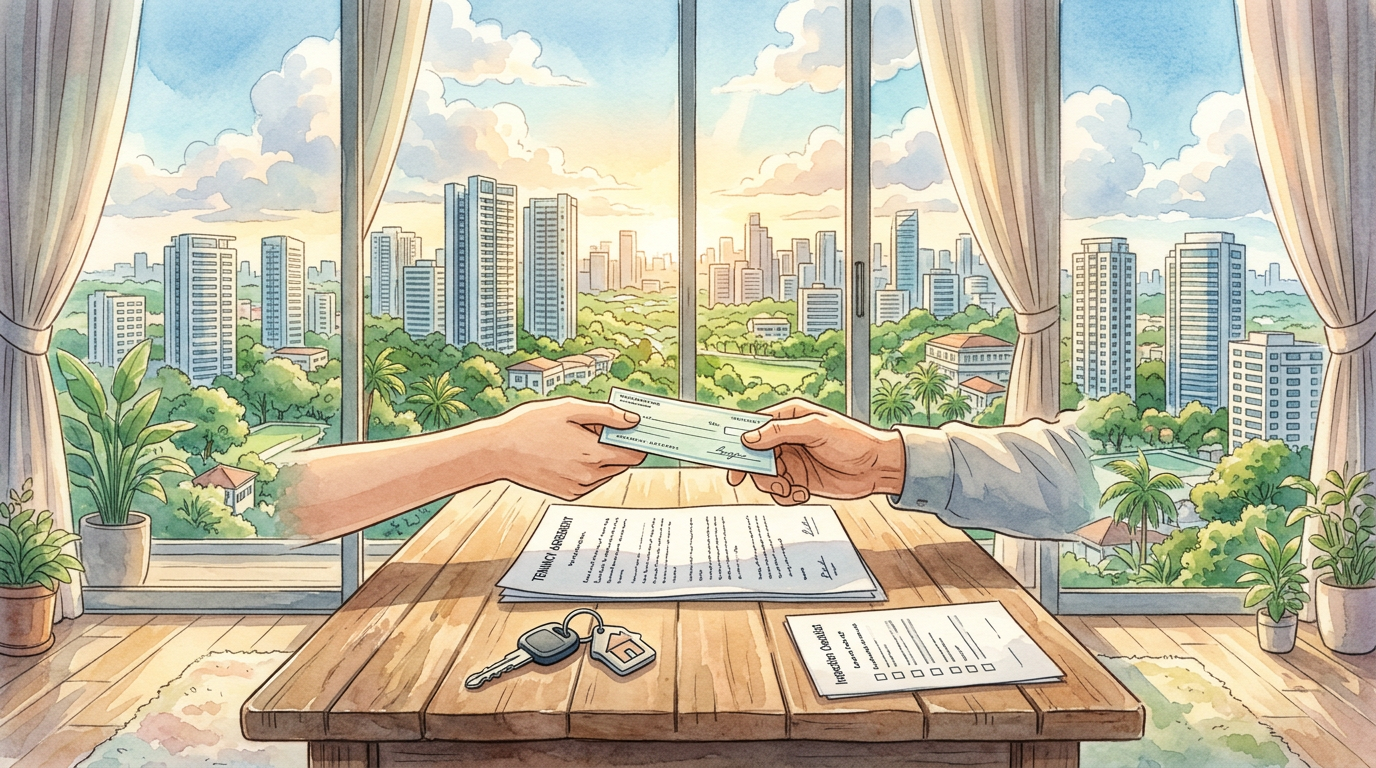
- Move‑in photo and video checklist: Within 24 hours of collecting keys, walk through every room, open all cabinets, test air‑con, lights and taps. Take clear photos and short videos, then send them via WhatsApp or email to your landlord or tenant, so there is a time‑stamped record.[3][5]
- Written acknowledgement: Ask the other party to confirm they have received and agree with the move‑in condition list.
- Track repairs and payments: Keep screenshots of PayNow transfers, bank GIRO, and all invoices for servicing (for example, quarterly aircon servicing at your expense – keep receipts and link them to the address).
- Central folder: Store all documents (tenancy agreement, inventory, photos, IRAS stamp duty acknowledgement) in a shared cloud folder.
For landlords managing multiple units, consider a simple documentation system and regular inspections, and connect with professional agents via to standardise check‑in/check‑out processes.
Mistake 2: Relying on verbal promises instead of the tenancy agreement
Singapore tenancy disputes are governed mainly by the contract (your tenancy agreement) and common law, not by broad “tenant protection” laws.[4] A very common mistake is trusting verbal promises and informal chats instead of checking what the tenancy agreement actually says.
Typical Singapore examples
- Agent verbally says, “Don’t worry, you can always renew at the same rent,” but the signed tenancy doesn’t include an option to renew.
- Landlord casually allows a tenant at a Pasir Ris condo to keep a small dog, but the agreement prohibits pets and the MCST rules are strict. When neighbours complain, the landlord suddenly insists the dog must go.
- Tenant thinks they can use the deposit to offset the final month’s rent because “all my previous landlords did that”, but the contract clearly states deposit cannot be used for rent.[3]
Safer approach: Let the written contract lead
To avoid this mistake:
- Always read the tenancy agreement fully before signing, especially clauses on repairs, access, early termination, and deposit use.[3][4]
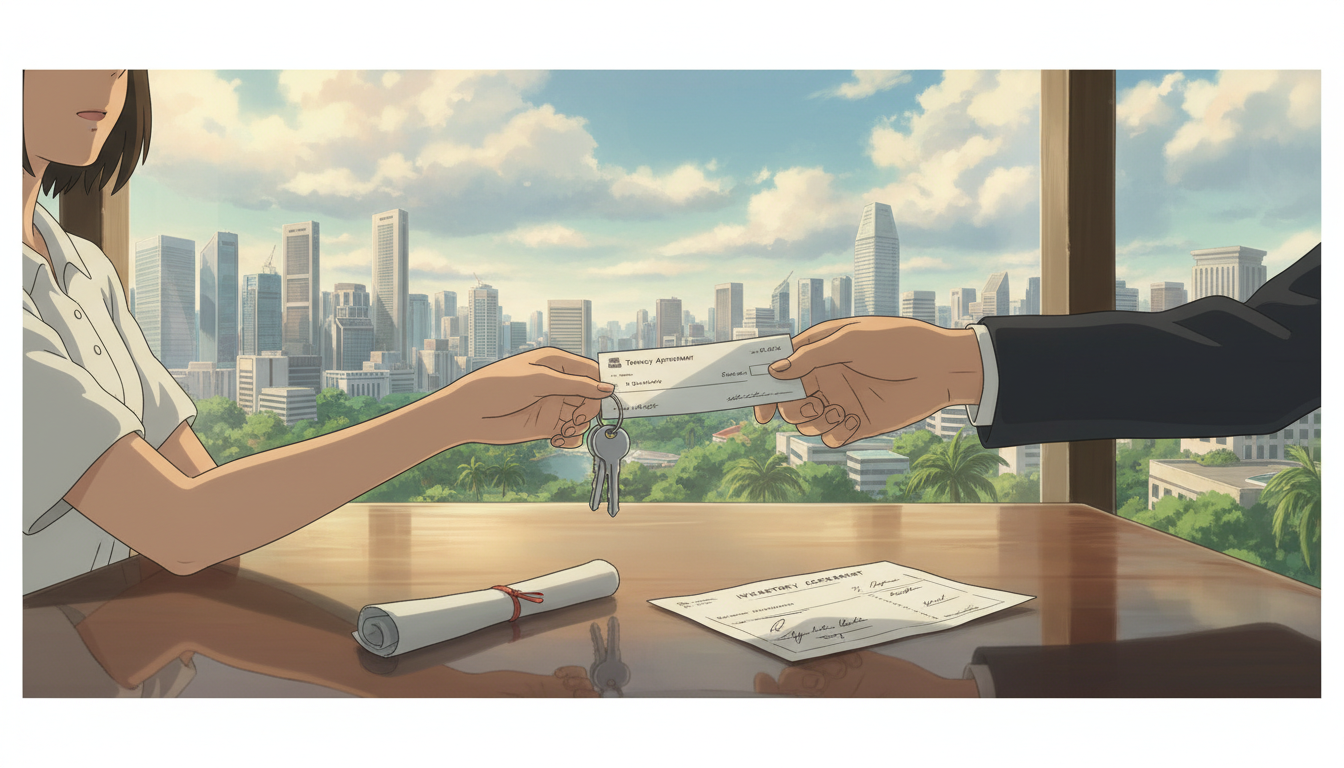
- Convert verbal promises into written clauses. If something is important (pet permission, painting, furniture removal, renewal), request it be added to the agreement before signing.
- For existing tenancies, confirm any new arrangement in writing: “As discussed, you have agreed that I may rent out one bedroom to a flatmate from 1 Aug 2026.”
If a dispute arises, your first step should be to re‑read the tenancy agreement and then refer to it in your messages. This single practice can prevent many tenancy conflicts from escalating.[4][9]
Mistake 3: Reacting emotionally instead of using calm written communication
In Singapore’s tight rental market, emotions can flare when rents are raised sharply or when landlords delay deposit refunds. A frequent mistake is to respond with angry calls, threats, or hostile texts, which often backfire and hurt your position if the matter goes before a mediator or the Small Claims Tribunals.[3][4][5]
How this complicates your case
- Tenants send long, angry voice notes accusing the landlord of “cheating” over minor cleaning charges.
- Landlords aggressively show up at the property without notice over late rent, upsetting family members and potentially breaching quiet enjoyment.
- Both sides threaten “I’ll see you in court” prematurely, shutting down room for compromise.
Safer approach: Structured written escalation
Homejourney suggests a staged communication framework:
- Clarify in writing first: Send a short WhatsApp or email summarising the issue factually (“On 2 June, the air‑con in bedroom 2 stopped working. Attached are photos and the technician’s report.”).
- Offer reasonable options: Suggest 2–3 solutions (sharing costs up to the minor repair limit, scheduling repairs at a convenient time, partial offset from deposit, etc.).[2][5]
- Set timelines: Politely ask for a response within a clear timeframe (3–5 working days is typical).
- Formal letter of demand: If no progress, send a more formal email or letter summarising facts, contract clauses and what you are seeking (e.g. refund of $3,000 deposit within 7 days). Lawyers in Singapore often recommend this before filing any claim.[4]
Keeping a calm, evidence‑based written trail shows mediators and the Small Claims Tribunals that you have acted reasonably, improving your credibility.[3][4]
Mistake 4: Not understanding repair, maintenance and “fair wear and tear” rules
Another major tenant complaint area is confusion over who pays for what repairs.[2][3][5] Many people only find out their obligations when the dispute has already blown up, especially around air‑conditioning, plumbing, and built‑in appliances.
Key Singapore norms you should know
While every tenancy is different, industry practice and commentary in Singapore generally follow these patterns:[2][3][5]
- Landlords usually bear major structural repairs and high‑value items (e.g. air‑con compressors, water heaters, built‑in ovens).
- Tenants usually pay for minor repairs up to a “minor repair limit” per incident – commonly around S$150–S$200, though this depends on the contract.[2][5]
- “Fair wear and tear” (for example, light scuff marks, ageing of fixtures) is normally at landlord’s cost, while clear damage or misuse (broken hob from impact, cigarette burns on sofa) is at tenant’s cost.[3]
Disputes arise when these expectations are not clearly written or documented. At the end of the lease, arguments over repainting costs, curtain cleaning and mattress stains are extremely common.[3]
Safer approach: Clarify obligations and service regularly
- Before signing, check what the tenancy says about the minor repair limit, servicing obligations (especially air‑cons), and cleaning expectations on handover.[3][5]
- Schedule regular servicing for air‑cons and keep receipts. You can use Homejourney’s trusted partners via Aircon Services to maintain a clear maintenance record.
- At move‑out, agree on a joint inspection. Refer to your original move‑in photos to distinguish existing wear from new damage.
If a disagreement remains, both sides should consider mediation or the Small Claims Tribunals, where factors such as age of property, length of tenancy and original condition will be weighed.[3][4]
Mistake 5: Ignoring legal pathways like mediation and the Small Claims Tribunals
Many people either give up too quickly (“too mafan to fight”) or jump straight to hiring lawyers. Both can be costly mistakes. Singapore provides clear, relatively accessible formal channels for rental dispute resolution, especially via the Community Mediation Centre (CMC) and the Small Claims Tribunals (SCT).[3][4]
Key legal and mediation options in Singapore
- Community Mediation Centre (CMC): Handles neighbour and tenancy conflicts involving minor sums and relationship issues (e.g. noise, minor damage, misunderstandings). It focuses on restoring relationships and agreements.[4]
- Small Claims Tribunals (SCT): Handles residential leases not exceeding 2 years, for disputes like unpaid rent, deposit refunds, and repair costs.[4][7] Lawyers are not allowed to represent parties, but you may consult a lawyer before filing.
- Claims limit: According to Singapore State Courts guidance, SCT handles claims up to S$20,000, which can be raised to S$30,000 if both parties agree in writing.[4]
Despite these options, a common mistake is assuming “nothing can be done” or that hiring a lawyer is the only route. On the other side, landlords may threaten court action without realising there is a specific process and documentation required to succeed.[4][5]
Safer approach: Know when and how to escalate
A practical escalation ladder:
- Negotiation: Try to resolve directly in writing.
- Mediation: Refer the case to CMC or a private mediator, especially where you still need to live together in the same block or where relationship matters for future references.[4]
- Small Claims Tribunals: File a claim for sums within its jurisdiction (for example, deposit refunds, minor damage claims). The SCT usually fixes a consultation/mediation within about 10–14 days of filing.[4]
- Court / legal action: For more complex or larger disputes (e.g. significant rent arrears or property damage), landlords may seek a writ of distress or other remedies with legal advice.[4]
Before taking any formal step, especially eviction or forfeiture of lease, landlords should consult a qualified lawyer or professional advisor. This guide is general information and not a substitute for legal advice.
Mistake 6: Not planning finances and over‑relying on deposits
Another common mistake in landlord–tenant disputes is treating the security deposit as a “buffer” for late rent or repairs, without thinking through cash flow. Tenants sometimes assume the landlord must “use the deposit” for the last month’s rent; landlords sometimes treat the deposit as automatic compensation for every small issue.
Why this creates conflict
- Tenants in areas like City Hall or Tiong Bahru, where rents can exceed S$4,000 per month for a 2‑bedroom unit, may struggle with cash flow at lease end when the deposit is still held back.
- Landlords who are servicing mortgages on investment units may depend on timely rent to cover loan instalments and become inflexible when tenants ask for temporary relief.
Safer approach: Use tools and clear expectations
- Tenants: Budget so you can pay the final month’s rent in full, without assuming it will be offset against deposit. Confirm in writing how and when the deposit will be refunded, and refer to our end‑of‑tenancy resources End of Tenancy Cost & Rights Guide for Singapore Tenants | Homejourney and End of Tenancy in Singapore: Tenant Rights, Obligations & Move-Out Checklist | H... .
- Landlords: Use Homejourney’s Bank Rates to compare financing and stress‑test rental yield, so you are not forced into risky decisions due to short‑term cash flow.
- Both: Clearly document how the deposit may be used, what evidence is required for deductions (quotes, invoices, photos), and realistic refund timelines (for example, within 14–30 days of handover).
Mistake 7: Poor tenant or landlord selection and vague expectations
Many disputes can be traced back to the start of the relationship. Landlords who rush to fill vacancies sometimes accept tenants without proper screening; tenants may rent from owners with a history of complaints shared informally among friends and colleagues.
Better practices at the start of every tenancy
- Landlords: Screen tenants for stable income, references, and clarity on intended use (number of occupants, work‑from‑home, pets). Use Homejourney’s to connect with experienced agents who prioritise compliance with HDB/URA rules.
- Tenants: Ask direct questions about previous tenant disputes, deposit refund practices, and expectations on visitors, noise and minor wear. In popular expat areas like Holland Village or Robertson Quay, this can make a big difference to your experience.
- Both: Ensure the tenancy complies with HDB subletting rules or URA private residential rules where relevant. For HDB, check the flat is approved for subletting and that your particulars are properly registered with HDB.
Setting expectations clearly at the beginning aligns interests and reduces the chance of disputes related to overcrowding, unauthorised subletting, or misuse of the property.