Knowing how to clean aircon filter at home is one of the simplest ways to keep your Singapore home cool, safe, and energy-efficient, but you also need to know when DIY aircon cleaning is no longer enough and it’s time to hire professionals. In this guide, Homejourney explains how to safely clean a clean aircon filter yourself, what an aircon filter wash involves, and when professional home AC maintenance is the wiser choice for HDB, condo, and landed homeowners.
How to Clean Aircon Filter at Home: Quick Answer
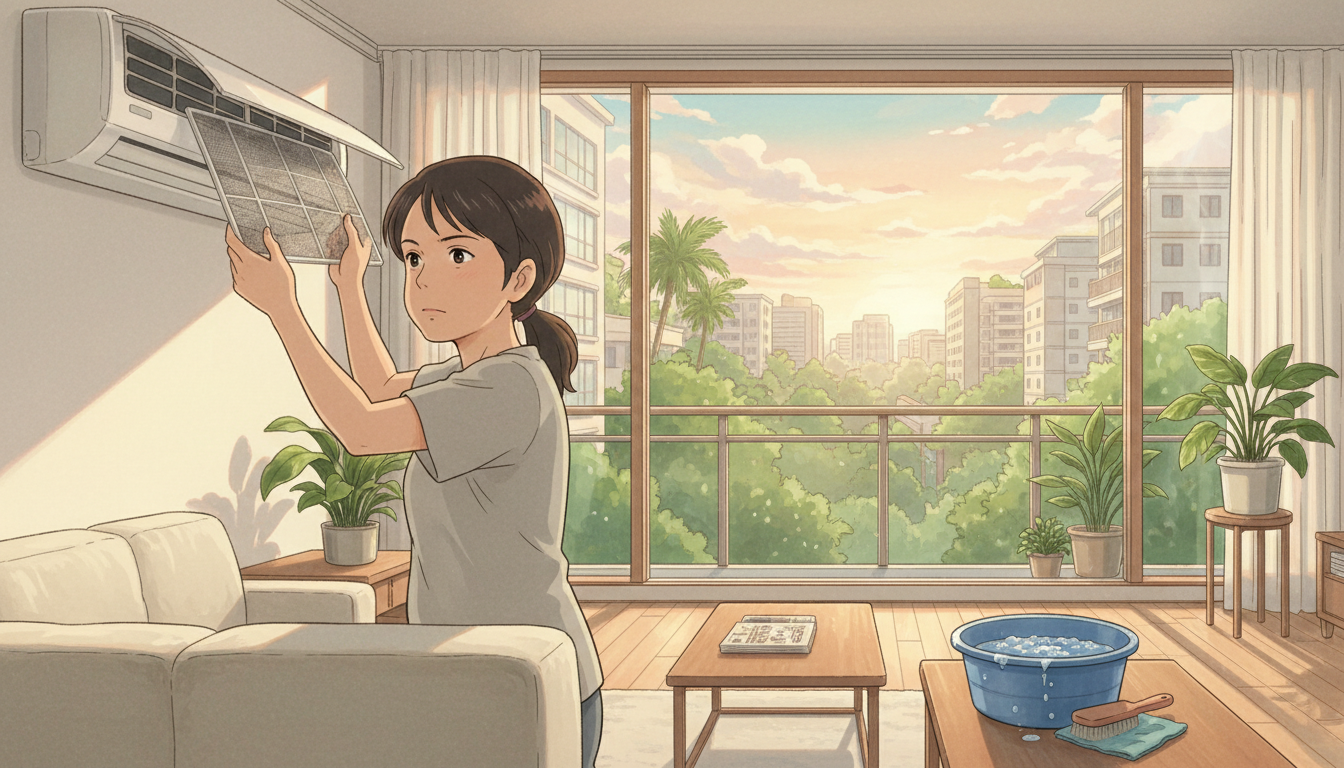
To clean an aircon filter at home, always turn off the power, gently open the front panel, remove the mesh filter, vacuum loose dust, wash it with mild soap and lukewarm water, rinse thoroughly, air-dry completely in the shade, then reinstall the dry filter and test the unit. For most Singapore homes, you should clean the filter every 2–3 months, or more frequently if the unit runs daily or the environment is dusty.
This cluster article supports Homejourney’s broader pillar on aircon servicing and home maintenance, focusing specifically on DIY aircon filter cleaning versus hiring professionals. If you need a full overview of servicing types, costs, and maintenance schedules, refer to our main pillar guide via Projects Directory and related cost content at Clean Aircon Filter at Home: 2026 Cost Guide | Homejourney .
Why Aircon Filter Cleaning Matters in Singapore Homes
In Singapore’s hot and humid climate, your aircon often runs several hours a day, especially in west-facing units at estates like Punggol, Woodlands, and Jurong West. When the filter is clogged, the unit has to work harder, which raises your electricity bill and increases wear on the compressor. Regular filter cleaning helps maintain airflow, keeps the room cooler, and reduces the risk of mould growth in your indoor unit.
Homejourney users living in older HDB blocks in towns like Ang Mo Kio or Bedok often notice that once they start cleaning filters every few months, their aircon becomes noticeably colder at the same temperature setting, especially in bedrooms with limited natural ventilation. For landlords, keeping filters clean also reduces complaints from tenants about bad smells or weak cooling, which can affect rental satisfaction and long-term tenancy.
Step-by-Step: DIY Aircon Filter Cleaning Safely
For most wall-mounted split units in HDB and condo apartments, DIY aircon filter cleaning is straightforward if you follow safety and handling guidelines. Below is a practical, Singapore-focused sequence based on common local aircon models and industry guidance.
1. Switch Off Power Completely
Before touching the unit, turn off the aircon using the remote, then switch off the wall isolator or power socket to cut electrical supply. This is important in older flats where the isolator is mounted just beside the indoor unit — you’ll usually find it above the bedroom door or near the living room ceiling trunking.
Homejourney strongly recommends never attempting DIY work with live power connected. If you’re unsure which switch controls your aircon, turn off the main circuit breaker as an extra safety measure and consider engaging a professional via Aircon Services .
2. Open the Front Panel Carefully
Place both hands at the sides of the indoor unit and gently lift the front plastic panel upwards until it clicks and stays open. Some older or budget models may have clips under the front edge; in private condos with designer systems, you may need to remove a cosmetic cover using a screwdriver, as advised in manufacturer manuals.
Avoid pulling the panel too hard; cracked covers are a common DIY mistake Homejourney sees in maintenance requests from estates like Woodlands and Tampines.
3. Remove the Mesh Filters
Once the panel is open, you’ll see one or two curved plastic mesh filters directly behind it. Gently release the bottom tabs and slide the filters down and out of the unit. Try not to shake them excessively to avoid dropping dust onto the coils or your floor.
In most Singapore HDB and condo units, these filters are reusable, so do not throw them away unless they are torn or warped. If your unit uses disposable filters (more common in some central systems in landed properties), check the model manual under the Building and Construction Authority (BCA) recommended practices for mechanical ventilation, or consult a professional via Aircon Services .
4. Vacuum Loose Dust
Use a vacuum cleaner with a soft brush attachment to gently remove loose dust from both sides of the filter. Always vacuum the front (dust-collecting) side first, then the back. This reduces the amount of dirt entering your sink and makes washing more effective.
In compact HDB kitchens or bathrooms, where space is tight, some homeowners prefer to vacuum the filters over the service yard floor drain to minimise mess. This simple insider trick makes cleanup much easier.
5. Wash With Mild Soap and Lukewarm Water
Fill a basin with lukewarm water and add a few drops of mild dishwashing liquid to create a gentle cleaning solution. Submerge the filter and soak for about 10–15 minutes, then use a soft brush (an old toothbrush works well) to remove any remaining dirt.
Do not use hot water, as it may warp or shrink the filter material. For stubborn odours, some guides suggest adding a small amount of baking soda to the wash water to help neutralise smells. However, if your filter smells strongly of mould even after washing, that’s a sign the entire unit may need a professional chemical overhaul.
6. Rinse Thoroughly and Air-Dry Fully
Rinse the filter under running water until all soap and residue are removed. It’s best to run water from the clean side (back) to push trapped dust outwards. Shake off excess water, then place the filter in a well-ventilated, shaded area to dry completely.
Never dry filters in direct midday sun along your corridor or balcony, as intense heat can warp the plastic frame. Equally, do not use a hairdryer, as this can damage the filter. In many Singapore flats, the service yard or a shaded window ledge works well — just remember to keep filters away from rain and heavy cooking fumes.
7. Reinstall and Test the Unit
Once the filters are completely dry, slide them back into their tracks and press the bottom tabs until they click into place. Close the front panel securely, restore power at the isolator, and switch on the aircon to ensure it’s running smoothly with good airflow.
If the unit is still not cold, noisy, or has a persistent smell after filter cleaning, DIY may no longer be sufficient, and you should consider professional servicing through Homejourney’s verified providers at Aircon Services .
DIY Aircon Cleaning vs Hiring Professionals: When to Choose Each
While DIY aircon filter cleaning is suitable for routine maintenance, Singapore homeowners need to recognise situations where hiring professionals is safer, more effective, and often cheaper in the long run. Homejourney distinguishes three key service types that go beyond basic filter wash: general servicing, chemical overhaul, and gas top-up.
General Servicing (Approx. $22 per Unit)
General servicing typically includes filter cleaning, basic coil and drain pan cleaning, checking gas levels, and inspecting the overall unit function. In 2026, many providers charge around $22 per unit for standard residential servicing packages, especially when servicing multiple units in the same home during one visit.
Compared with DIY filter cleaning, professional general servicing usually also covers:
- Cleaning evaporator coils and blower fan for better cooling.
- Flushing the drain line to prevent water leaks.
- Checking refrigerant pressure and basic electrical connections.
For busy households in areas like Tiong Bahru or Bukit Batok, booking general servicing once or twice a year through Homejourney’s verified technicians can be an efficient way to complement your regular DIY filter wash.
Chemical Overhaul (Approx. $110 per Unit)
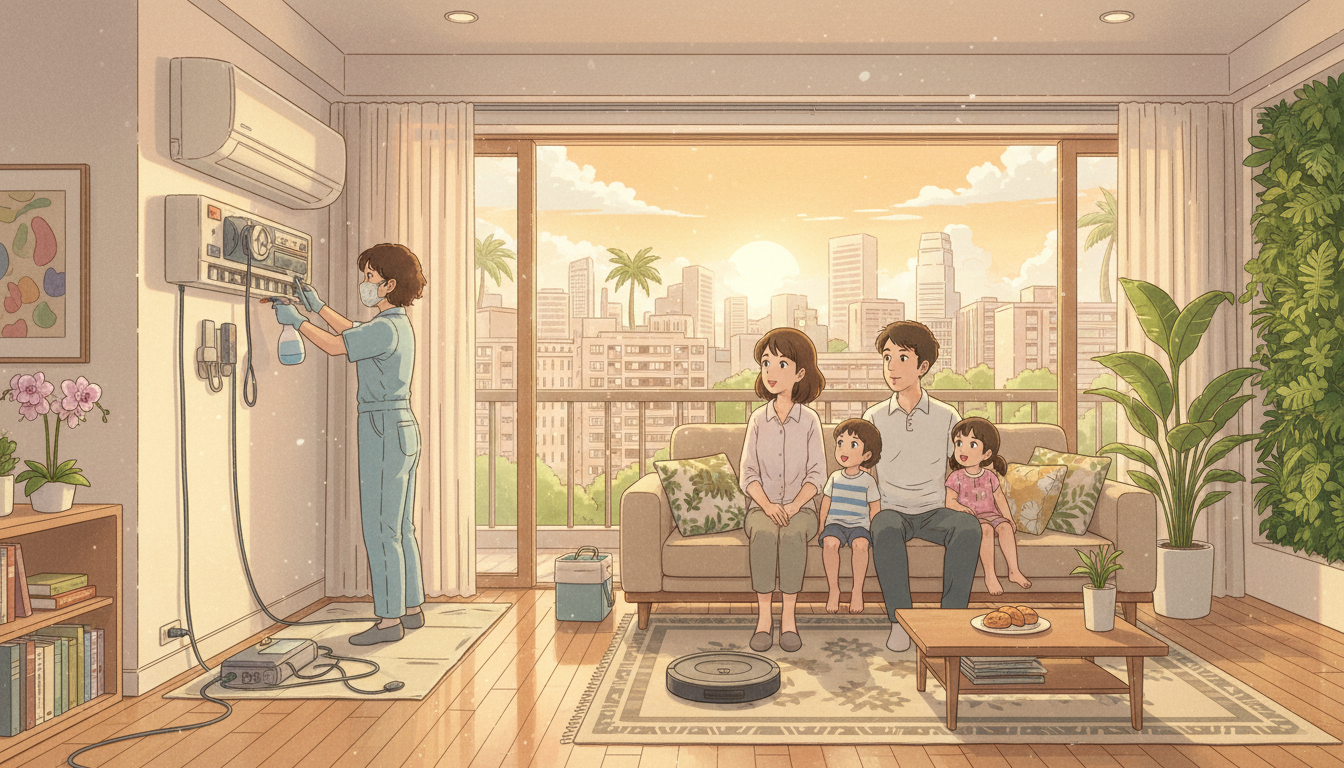
Chemical overhaul involves dismantling the indoor unit, deep cleaning coils and internal components with chemical solutions, and thoroughly flushing the drain system. In Singapore, this more intensive service costs about $110 per unit in 2026, depending on the system configuration and accessibility.
You should consider a chemical overhaul instead of DIY when:
- The aircon emits strong mouldy or sour odours even after filter cleaning.
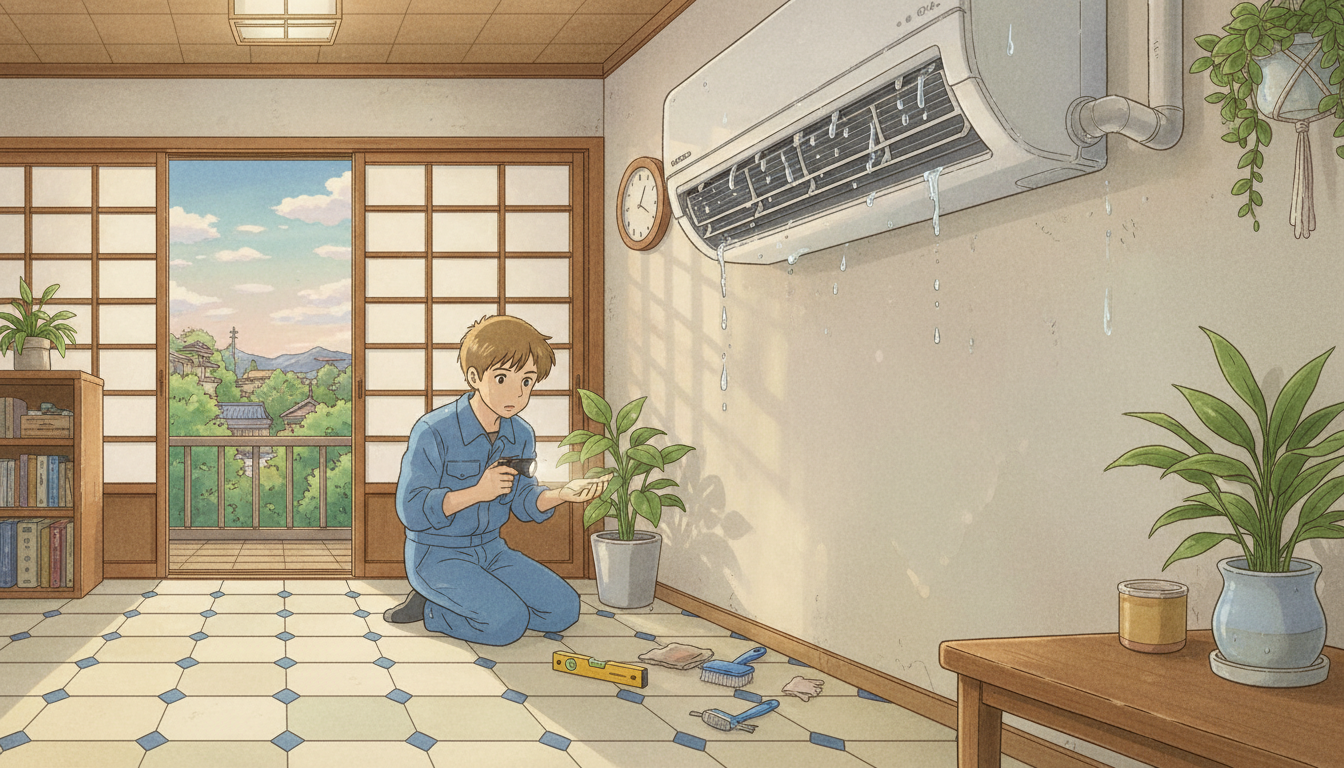
- Water leaks persist from the indoor unit despite cleaning the drain pan.
- The unit is old (more than 8–10 years) and has never had deep cleaning.
- There are allergy or asthma concerns in the household, especially for children or elderly occupants.
Because chemical overhaul involves dismantling the unit and handling chemicals, it should always be done by trained, BCA-registered contractors. Use Homejourney’s Aircon Services to book vetted providers with transparent pricing and verified reviews.
Gas Top-Up (Approx. $80 Flat Rate)
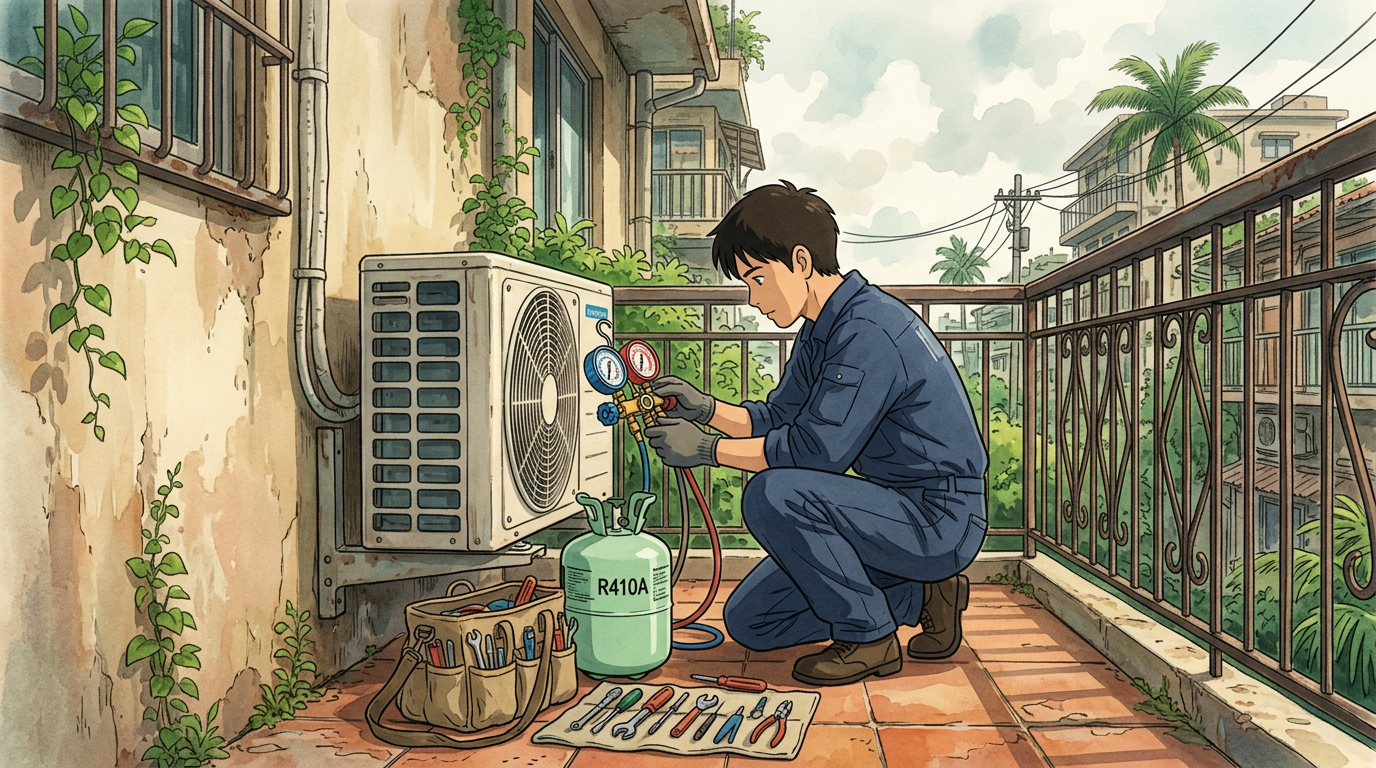
If your aircon is not cooling properly even after filter cleaning and general servicing, it may be low on refrigerant gas. Gas top-up services in Singapore are typically charged at around $80 per job for common residential systems in 2026.
Signs you may need gas top-up rather than another DIY attempt include:
- Room never reaches the set temperature despite long running hours.
- Outdoor unit or piping shows signs of frost or ice.
- Technician’s pressure measurements indicate low refrigerant levels.
Gas handling must comply with safety standards and environmental regulations, so it is not suitable for DIY. Engage a professional through Homejourney, ensuring they are properly licensed and experienced with your system type.
How Often Should You Clean Aircon Filters in Singapore?
In Singapore’s climate, a practical rule of thumb is to clean filters every 2–3 months for typical residential use, and monthly if you use the aircon nightly or have pets or dusty surroundings. In areas near construction sites (for example, newer developments in Tengah or around upcoming MRT lines), dust levels are higher, and more frequent filter wash can help maintain performance.
Homejourney recommends:
- HDB and condo bedrooms: DIY filter cleaning every 2–3 months, professional general servicing once a year.
- Living rooms used heavily: DIY every 1–2 months, professional servicing every 6–12 months.
- Landed houses with multiple units: Stagger cleaning schedule and consider an annual package with a trusted contractor via Aircon Services .
For new homeowners comparing mortgage options via Mortgage Rates and planning renovation budgets, factoring in annual aircon servicing costs helps maintain long-term property value and tenant comfort, especially for investment units found through Property Search or Property Search .
Safety, Regulations, and Choosing Professional Aircon Providers
While DIY aircon filter wash is generally safe if you follow basic precautions, more complex servicing should adhere to Singapore’s building and safety standards. The BCA provides licensing frameworks for contractors dealing with building works, and MCSTs in condominiums may have specific rules about servicing, access, and working hours.
When choosing a professional aircon servicing provider, Homejourney suggests looking at:
- Licensing and registration: Check that the company is properly registered with ACRA and adheres to BCA guidelines for mechanical systems.
- Experience with HDB and condo units: Providers familiar with HDB rules and condo MCST requirements can avoid issues with access and work timing.
- Transparent pricing: Clear service descriptions (general servicing vs chemical overhaul) and upfront rates around $22–$110 per unit and $80 for gas top-up in 2026.
- Warranty on work: Ask if they provide short-term guarantees on workmanship and leakage checks.
Homejourney’s Aircon Services connects you with verified providers, transparent quotations, and real reviews from Singapore homeowners, aligning with our focus on user safety and trust. When assessing property investments using Projects or Projects Directory , factoring in reliable home services access can also influence long-term holding costs.
Real-World Examples: DIY vs Pros in Singapore Homes
In a 4-room HDB flat in Woodlands, a family might run their bedroom aircon nearly every night. After three months without cleaning, they notice reduced cooling and slight musty smells. A quick DIY filter wash following the steps above often restores airflow and reduces odour, saving on immediate servicing costs. For more tips specific to the area, see How to Choose Reliable Home Services Providers in Woodlands, Singapore | Homejou... and Home Services in Woodlands Cost Guide: Singapore Prices 2026 .
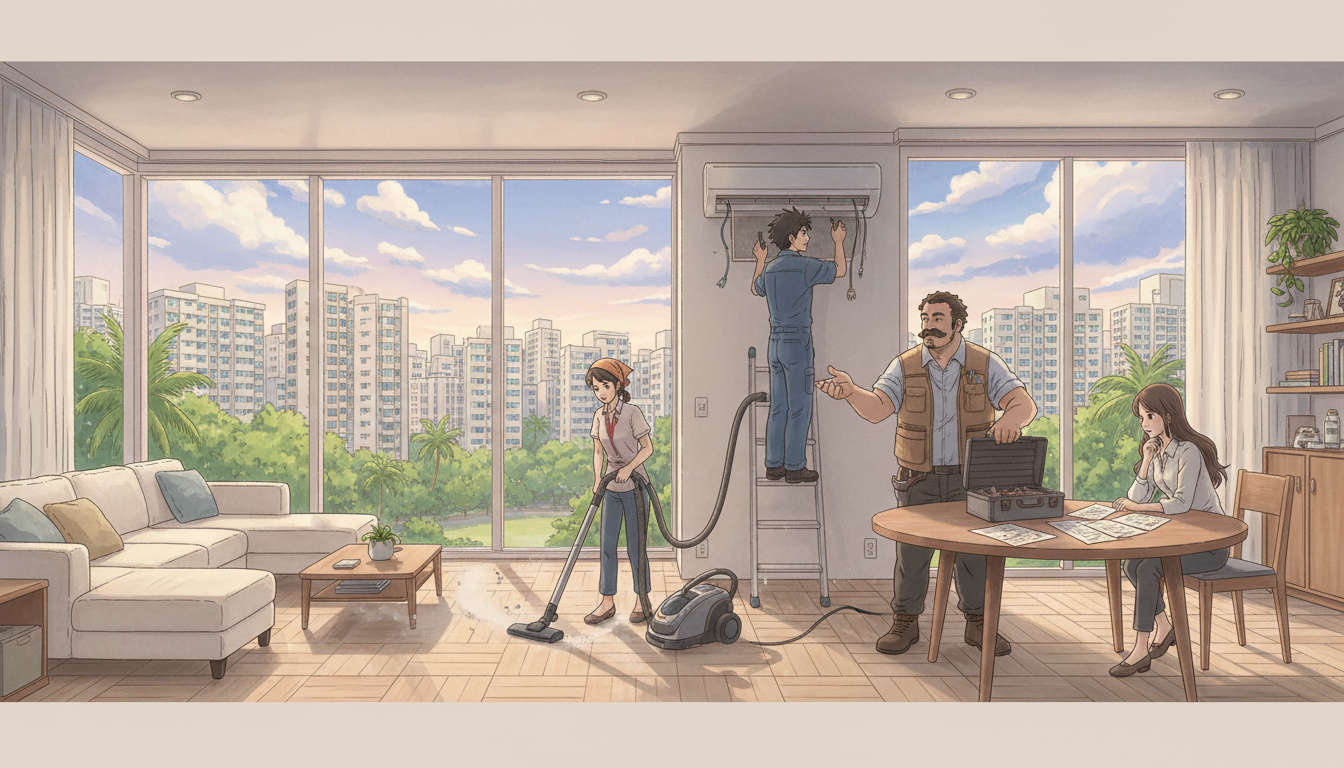
Conversely, in a condo unit in Pasir Ris with older aircon systems, DIY filter cleaning may not fully resolve water drips along the wall and strong smells. In such cases, a professional chemical overhaul at about $110 per unit is usually necessary. The technician will dismantle the indoor unit, clean coils and the blower with chemicals, and thoroughly flush the drainage — work that is impractical and unsafe for typical homeowners.
Landlords managing multiple units sometimes schedule annual servicing for all aircon units via Homejourney, combining general servicing and selected chemical overhauls based on inspection. This approach helps keep tenant complaints low and reduces emergency breakdown calls during peak heat periods.