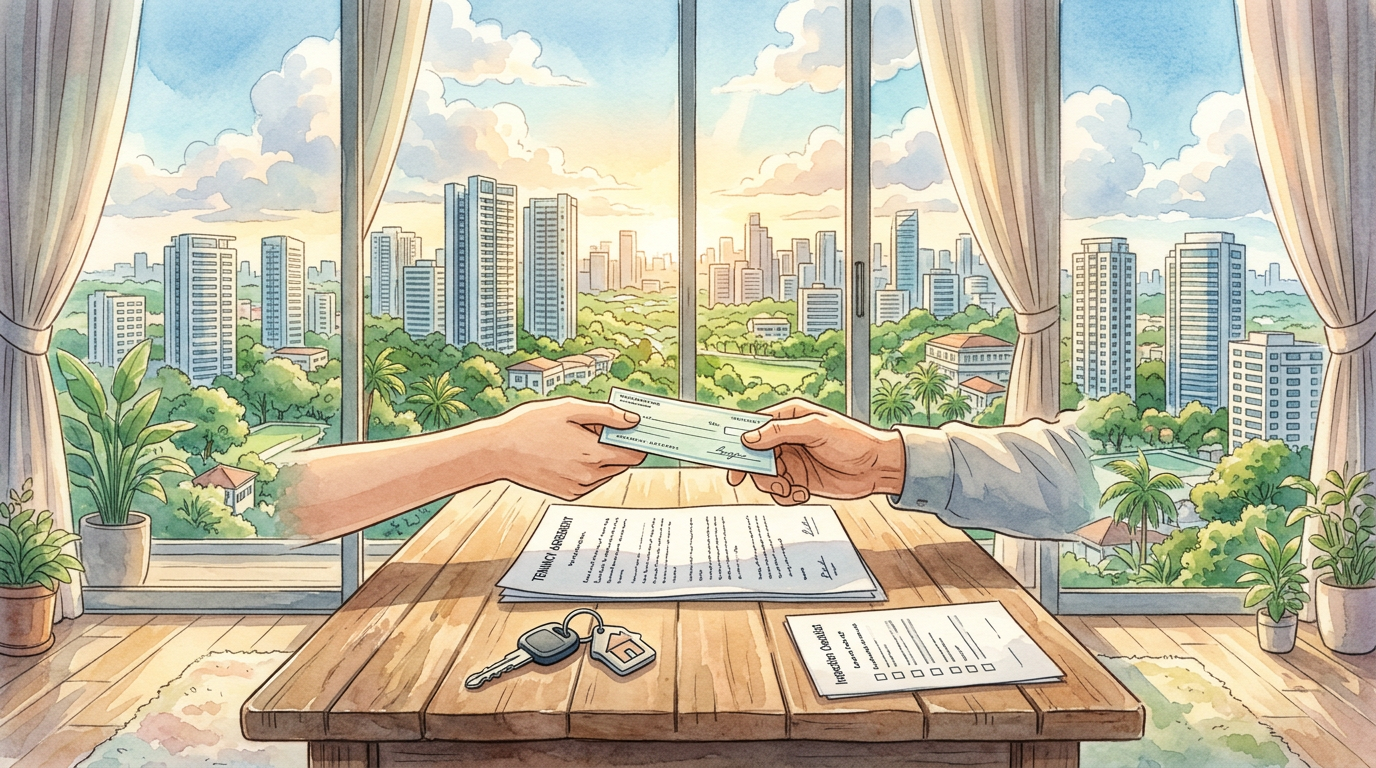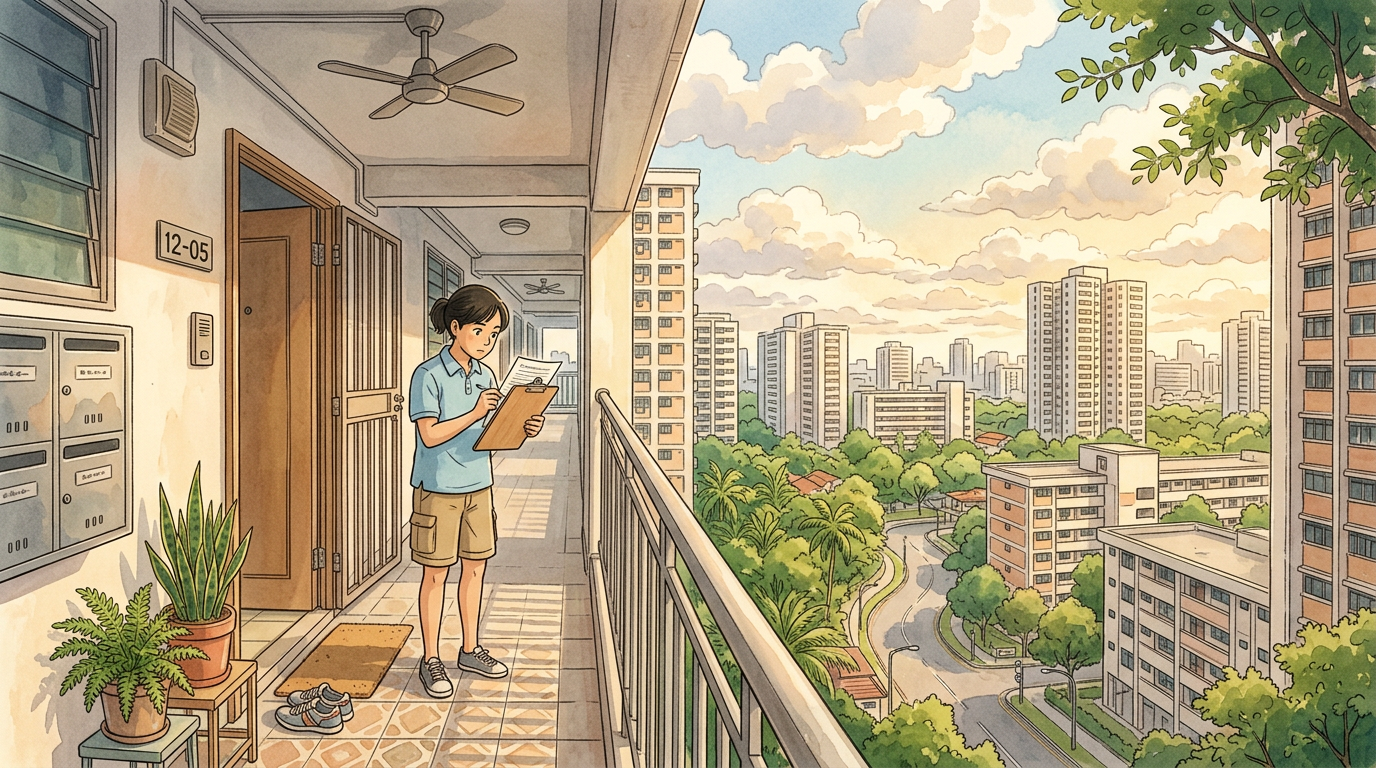
In Singapore, tenant rights during lease termination are largely governed by the tenancy agreement and common law, but tenants are protected against unfair or illegal eviction, forced early termination without contractual basis, and unilateral landlord actions that breach the agreement.[1][2][3][4] Understanding these rights helps both tenants and landlords manage end-of-tenancy situations safely and avoid costly disputes.
This cluster guide focuses specifically on Tenant Rights During Lease Termination in Singapore, and complements Homejourney’s broader pillar guide on end-of-tenancy rights and obligations End of Tenancy in Singapore: Tenant Rights, Obligations & Move-Out Checklist | H... . It provides practical, step-by-step advice for tenants and landlords dealing with eviction in Singapore, early termination, illegal eviction, and the formal eviction process.
Understanding Tenant Rights During Lease Termination in Singapore
Singapore does not have a single, comprehensive landlord–tenant statute. Instead, tenant rights arise from the written tenancy agreement, the common law (inherited from English law), and specific legislation such as the Civil Law Act and Distress Act.[1][2][5] This means that what is written in your contract usually takes priority, so it is critical to review your agreement before any termination or eviction process.
For most residential tenancies in Singapore—whether in HDB flats in towns like Tampines, Jurong West or Punggol, or private condominiums in areas like Tiong Bahru or River Valley—key tenant rights at termination typically include:
- Right to proper notice: For periodic leases (e.g. month-to-month), the lease can only be terminated with the notice period stated in the contract; if not stated, a standard minimum of about 30 days is common.[1][2]
- Right to quiet enjoyment until the lease ends: Landlords must allow tenants to use the premises without interference until lawful termination.[2][5]
- Right to protection from illegal eviction: Landlords cannot simply lock tenants out, cut utilities, or seize personal belongings without a court order or lawful basis.[1][5]
- Right to contractual enforcement: If the landlord terminates without a valid contractual right, the tenant may claim damages for breach of contract.[3][4]
- Right to due process for eviction: If a landlord seeks to evict for non-payment or serious breach, they generally need to follow prescribed legal procedures, including court applications.[5]
Homejourney’s safety-first approach ensures tenants can understand these rights before signing a lease or responding to an eviction notice, so they can navigate termination confidently and minimise risk.
Legal Basis: Eviction Process and Tenant Eviction Rights
In Singapore, eviction refers to the legal removal of a tenant from a property, usually for reasons such as persistent non-payment of rent, serious damage, or unauthorised subletting.[5] The eviction process is rooted in contract law and specific statutory powers, such as the landlord’s right to seek a court order or a writ of distress.[5]
According to Singapore landlord–tenant practice:[1][2][5]
- Landlords can terminate a lease when the agreed term expires, when proper contractual notice is given for a periodic lease, or when a tenant commits a serious (repudiatory) breach such as failing to pay rent or causing major damage.[2][5]
- For serious breaches, landlords may seek to forfeit the lease and re-enter the property, but the right of forfeiture typically must be stated in the tenancy agreement or implied by law in certain circumstances.[5]
- To recover arrears, landlords may apply to court for a writ of distress, allowing seizure and sale of tenant’s goods for up to 12 months of unpaid rent—but they cannot personally seize belongings without a court order.[5]
Tenant eviction rights in this context include:
- The right to receive contractual eviction notice (often a written notice of demand for rent arrears, followed by notice of termination if unresolved).[5]
- The right to contest eviction if the alleged breach is disputed, and to raise counterclaims (for example, if the landlord has failed to maintain the property or breached obligations first).[5][6]
- The right to stay in the property until lawful termination, unless a court order states otherwise.[5]
Where eviction is threatened, Homejourney strongly encourages tenants to review their tenancy agreement and seek early advice—either through Community Mediation Centre, legal counsel, or dedicated guides like How to Respond to an Eviction Notice in Singapore How to Respond to an Eviction Notice in Singapore | Homejourney Safety Guide .
Early Termination: When Can Tenants End a Lease?
Most Singapore tenancy agreements for condos or HDB flats (often 1–2 years) are drafted to favour landlords, and do not automatically grant tenants a right to end the lease early.[1][3] As Bird & Bird’s Singapore tenancy guide notes, corporate and residential leases usually accord pre-termination rights to landlords, rarely to tenants, except where specific clauses (e.g. diplomatic clause) are negotiated.[3]
Tenants can typically terminate early only if:
- There is a contractual right to terminate—for example, a diplomatic clause for expats being relocated, or a break clause allowing termination after a minimum period with written notice.[3][6]
- There is mutual agreement—documented via a Deed of Surrender and Release, setting out compensation, move-out date, and deposit treatment.[3][6]
- The landlord has materially breached the lease—for instance, failing to perform essential repairs or repeatedly interfering with quiet enjoyment; such breaches may give tenants grounds to terminate without penalty, subject to legal advice.[2][6]
- Small Claims Tribunal (SCT) intervention—in some situations, tenants may seek SCT orders relating to the lease, including issues that effectively end the tenancy.[6]
Practically, in areas like Clementi or Bishan where rents can range from around S$2,500–S$3,500 for a typical three-room HDB or two-bedroom condo, early termination can involve negotiation of surrender fees equivalent to one to 1.5 months’ rent, depending on market demand and how quickly the landlord expects to find a replacement tenant.[6] Experienced local tenants often check nearby MRT-linked developments on Homejourney’s rental search page Property Search to gauge market conditions before negotiating.
Illegal Eviction in Singapore: Warning Signs and Protection
Illegal eviction occurs when a landlord attempts to force a tenant out without following the tenancy agreement or lawful legal process—such as changing locks, cutting off water or electricity, removing furniture, or harassing the tenant into leaving.[1][5] This is especially risky in dense estates like Yishun or Hougang, where neighbours quickly notice disturbances and may call the authorities.
Singapore practice is clear:[5]
- Landlords cannot personally seize a tenant’s belongings just because rent is unpaid.[5]
- Re-entry and forfeiture typically require contractual rights or court involvement, especially where disputes exist.[5]
- Utility disconnection or lock changes intended to drive the tenant out may expose the landlord to claims for damages or nuisance.
Key warning signs of illegal eviction include:
- Receiving verbal demands to vacate within a few days without written notice or reference to the tenancy agreement.
- Locks being changed while you are at work—common in some dispute cases where tenants return to find belongings inside but no access.
- Landlord entering the property frequently without consent or notice, especially late at night, to pressure you to move out.
- Threats of police involvement solely over unpaid rent (note: non-payment is typically a civil, not criminal, matter).
Homejourney’s dedicated guide Illegal Eviction in Singapore: Warning Signs Illegal Eviction in Singapore: Warning Signs | Homejourney offers more detail, but tenants should immediately document every incident and avoid confrontations.
Practical Steps for Tenants When Termination or Eviction Arises
1. Review Your Tenancy Agreement Thoroughly
Before responding to any eviction notice or termination proposal, read the tenancy agreement line by line. Look for:
- Termination clauses—who can terminate, for what reasons, and with what notice period.[2][3]
- Diplomatic or break clauses—often used by expats living near CBD or Orchard Road, allowing early exit if employment changes.[3][6]
- Repair and access clauses—obligations to maintain the unit and provide landlord access for maintenance.[2]
- Deposit forfeiture rules—conditions under which the landlord can keep all or part of the security deposit.[3][8]
Tenants in older estates like Bedok or Queenstown often face issues around air-conditioning or plumbing; if the landlord has failed repeated repair obligations, this may become relevant when negotiating termination. Homejourney’s aircon services partners Aircon Services can help ensure maintenance issues are documented and properly addressed.
2. Communicate in Writing and Stay Calm
When your landlord raises termination or threatens eviction:
- Respond via email or text, summarising what was said and your understanding of the situation.
- Refer explicitly to the relevant clauses in the tenancy agreement.
- Politely request clarification of the landlord’s legal basis for termination and the proposed timeline.
- Keep all messages, photos and voice notes—they may be important if the matter escalates.
Homejourney’s guide on How to Handle Landlord Disputes in Singapore How to Handle Landlord Disputes in Singapore | Homejourney includes communication templates that can help tenants write firm but non-confrontational responses.
3. Document Issues and Evidence
Documentation is often decisive at the Small Claims Tribunal (SCT) or in court. Tenants should:
- Maintain a folder with the stamped tenancy agreement (IRAS stamp duty), payment records, and utility bills.[1][4]
- Keep photos or videos of the unit’s condition at move-in and move-out.
- Record dates and details of landlord visits, repair requests, and any harassment.
- Save receipts for repairs you paid for when the landlord refused to act.
Stamp duty for leases of one year or more is typically 0.4% of total rent for the lease period up to four years, and is usually payable by the tenant, as noted in Singapore rental law references.[1] A properly stamped agreement strengthens enforceability when asserting your rights.
4. Use Mediation Before Litigation Where Possible
Most landlord–tenant disputes in Singapore are settled via mediation rather than full court trials.[1][6] Tenants can consider:
- Community Mediation Centre (CMC)—for neighbour and tenancy disputes, offering a neutral environment to reach agreement.
- Singapore Mediation Centre (SMC) or Consumer Association of Singapore (CASE)—common venues for landlord–tenant disagreements.[1]
Mediation is especially useful in fast-moving markets like Jurong East or Paya Lebar, where both parties may prefer a quick resolution so the unit can be re-let, and tenants can find alternative Housing Development Board or condo rentals through Homejourney’s rental search Property Search .
Legal Remedies: Small Claims Tribunal and Court Options
Where termination or eviction disputes cannot be resolved amicably, tenants have access to formal legal remedies.
Small Claims Tribunal (SCT)
The SCT deals with disputes up to S$20,000 (or S$30,000 with written consent), making it suitable for most residential tenancy conflicts about deposits, unpaid rent, or minor damage.[6] Common tenant uses of the SCT include:
- Claiming back wrongfully forfeited security deposits.
- Seeking compensation for illegal eviction or breach of quiet enjoyment.
- Resolving disagreements about early termination fees.
Typical steps include:[6]
- Gather documentation: tenancy agreement, IRAS stamp certificate, correspondence, photos.
- File a claim with the SCT; filing fees are commonly in the S$10–S$50 range depending on claim amount.[6]
- Attend mediation or hearing; lawyers are not required, and the process is designed to be accessible.
Court Actions and Legal Advice
For more complex cases—such as high-value leases in prime districts like Sentosa Cove or Marina Bay, or disputes involving corporate tenants—landlords or tenants may need to:
- File a civil suit for breach of contract, seeking damages for wrongful termination or unpaid rent.[3][4]
- Apply for orders to recover property or enforce forfeiture, under landlord rights outlined in Singapore legal practice.[5]
Legal fees can be substantial, so both tenants and landlords should carefully consider whether negotiation or mediation can achieve similar outcomes at lower cost. Homejourney encourages users to seek professional legal advice when disputes involve large sums or complex corporate leases.
Prevention Tips: Protecting Yourself Before Lease Termination
Key Clauses to Check Before Signing
Prevention is the best protection. Before signing any lease—whether for a two-bedroom condo near Redhill MRT or a 4-room HDB in Ang Mo Kio—tenants should:
- Confirm termination and eviction clauses, including notice periods and grounds for forfeiture.[2][5]
- Negotiate a diplomatic or break clause if employment or relocation is uncertain.[3][6]
- Clarify repair and maintenance responsibilities, especially for air-conditioning, plumbing and built-in appliances.[2]
- Ensure deposit conditions are clearly stated, including timelines for refund and what constitutes valid reasons to withhold it.[3][8]
Homejourney’s End of Tenancy Rights in Singapore: Tenant Checklist End of Tenancy Rights in Singapore: Homejourney Tenant Checklist offers a practical list of clauses to review before you commit.
Documentation to Keep Throughout the Lease
From move-in to move-out, tenants should maintain:
- A signed, stamped tenancy agreement and inventory list.[1][4]
- Singapore Property Market Analysis 1 (2026)
- Singapore Property Market Analysis 2 (2026)
- Singapore Property Market Analysis 3 (2026)
- Singapore Property Market Analysis 4 (2026)
- Singapore Property Market Analysis 5 (2026)
- Singapore Property Market Analysis 6 (2026)
- Singapore Property Market Analysis 8 (2026)