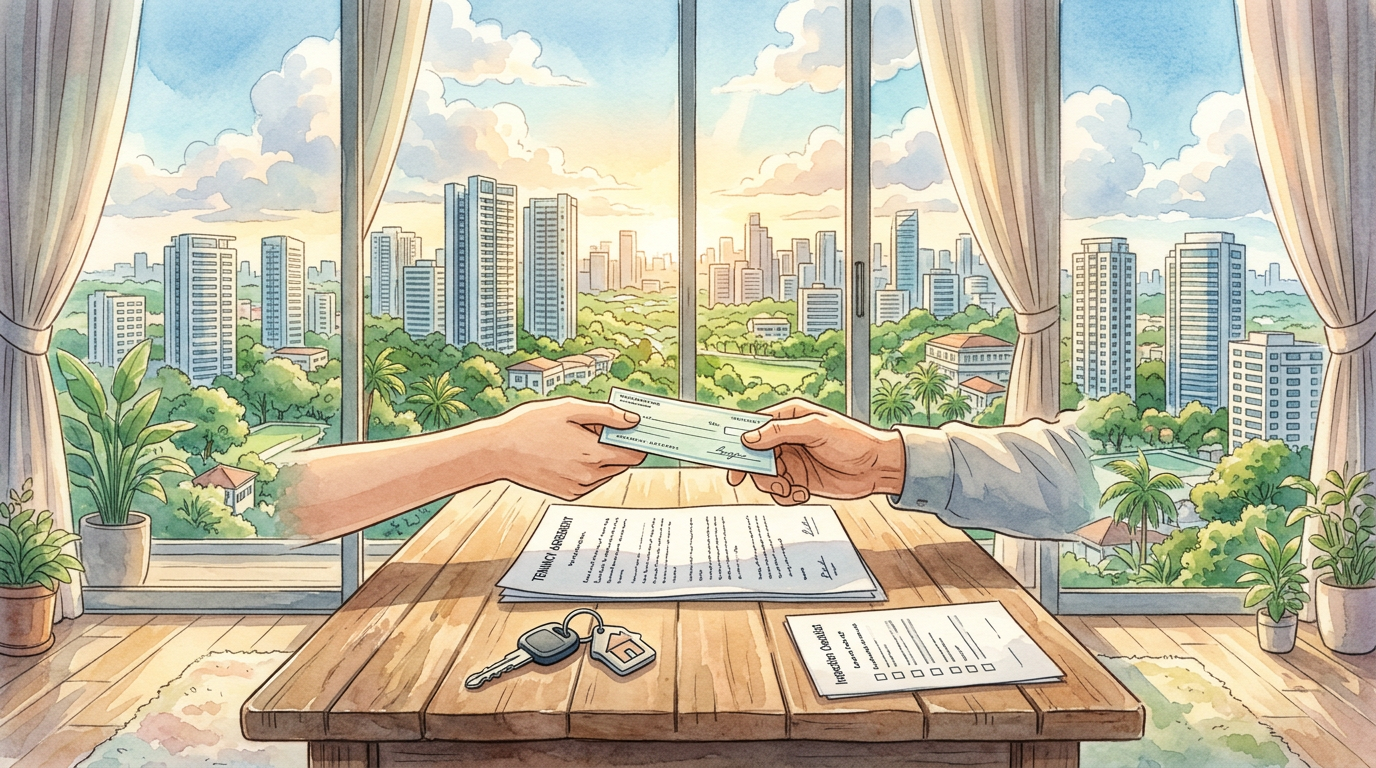
Illegal Eviction and Lockouts in Singapore: Tenant Response Framework is about one core principle: your landlord cannot legally force you out by changing the locks, cutting utilities, or harassing you without following the proper legal eviction process and, in most cases, obtaining a court order. If you arrive home to find your lock changed, your access card disabled, or your water and electricity cut off, you still have rights to regain access, claim losses, and hold the landlord accountable.
This focused Homejourney guide builds on our main pillar on tenant and landlord rights in Singapore, and zooms into the exact steps tenants and landlords must take when faced with illegal eviction behaviour or lockouts. It is written for tenants renting in popular estates like Tampines, Jurong, Bishan and central condos, as well as HDB landlords and private property investors who want to stay on the right side of the law while protecting their interests.
What Counts as Illegal Eviction and Lockouts in Singapore?
In Singapore, there is no single tenant-protection statute, but tenancy law is based on common law, your written tenancy agreement, and court procedure. Within this framework, illegal eviction usually refers to self-help actions by a landlord that bypass due process, such as:
- Changing locks without lawful authority while a valid tenancy agreement is in force.
- Cutting off water, electricity, or Wi-Fi to force the tenant to vacate.
- Removing or dumping the tenant’s belongings without a court order.
- Blocking access by withholding entry cards, keys, or gate access codes.
- Harassing or threatening the tenant repeatedly to compel move-out.
Law firms and rights guides consistently note that a landlord cannot physically evict you, re-enter by force, or change locks to exclude you, without using the court process. Even when rent is owed or the tenant has breached terms, illegal lockouts remain unlawful; the proper route is written notice, followed by State Courts proceedings and a writ of possession enforced by the sheriff where necessary.
From a practical standpoint, this protects tenants by preserving quiet enjoyment (your right to occupy the premises without unreasonable interference) and ensuring that disputes go through formal channels rather than intimidation or sudden lock changes. For landlords, staying within these boundaries avoids potential criminal complaints, civil claims for damages, and reputational damage in tight-knit communities from Woodlands to Tiong Bahru, where word about difficult landlords spreads quickly.
Tenant Response Framework: Immediate Steps During a Lockout
When you face a lockout at 10pm arriving home from Raffles Place MRT or find your utilities abruptly cut in a Jurong West HDB flat, it is easy to panic. Homejourney recommends a structured response framework to keep you safe and strengthen your legal position.
Step 1: Stay Safe and Avoid Confrontation
If the landlord or their representatives are present and behaving aggressively, prioritise safety. Legal resources emphasize that using force or threatening tenants to vacate is unlawful, and may amount to offences the police can investigate. Do not push, shove, or attempt to break into the unit, as this could escalate matters and complicate your case.
Step 2: Document Everything in Detail
Courts and the Small Claims Tribunal rely heavily on evidence. Homejourney and legal guides advise the following documentation steps:
- Take clear photos and videos of the door, changed lock, disabled access card, or utility meters showing shut-off.
- Record the common area environment – for example, corridor lights in a Punggol HDB block remaining on while your unit is dark due to cut electricity.
- Save all WhatsApp messages, emails and voice notes from the landlord or agent mentioning lock changes, demands to leave, or threats.
- Write a timeline of events while details are fresh, including dates of last rent payment, any previous disputes, and the exact time you discovered the lockout.
Step 3: Assert Your Rights in Writing
Send a calm but firm written message (WhatsApp and email) to your landlord and, if applicable, the agent:
- State that you have a valid tenancy agreement and that self-help eviction actions are unlawful.
- Demand immediate restoration of access, including keys, cards and utilities.
- Confirm you are willing to discuss payment or other issues through lawful channels, including mediation or SCT, not lockouts.
This written assertion is consistent with guidance that tenants should clearly inform landlords that lockouts and utility cuts are not acceptable and must be reversed. If the landlord refuses or ignores you, the written record will support later claims for losses such as emergency hotel stays or alternative accommodation in areas like Geylang or Clementi.
Step 4: Contact Police for Safety and Entry Issues
Several Singapore law sources indicate that self-help eviction and lockouts can be treated as trespass, harassment or unlawful interference and that tenants locked out should call the police promptly. Police officers typically will not enforce civil tenancy rights directly, but they may:
- Help de-escalate confrontations at the unit entrance.
- Advise both parties that changing locks or using threats is not acceptable.
- Record an incident report, creating contemporaneous evidence.
In more serious cases involving repeated threats or stalking, tenants may explore a Protection Order under the Protection from Harassment Act (POHA), as suggested by housing rights resources. This is especially relevant where landlord harassment continues at odd hours or in common spaces like lift lobbies and void decks.
Step 5: Secure Temporary Accommodation if Needed
If you cannot enter your unit that night, secure safe short-term accommodation (e.g., nearby hotel in Bugis or a serviced apartment in River Valley). Keep all receipts and records; these costs may be claimed as consequential losses if you succeed later at the Small Claims Tribunal. Many expats and students staying in central condos or HDB rental rooms rely on this step to avoid unsafe overnight situations when an illegal lockout occurs unexpectedly.
Legal Remedies: Mediation, Small Claims Tribunal and Court
Once immediate safety and shelter are addressed, the next phase is asserting your rights through Singapore’s formal dispute channels. The most appropriate route depends on your goals: restoring access, claiming money, or ending a problematic tenancy.
Community Mediation Centre (CMC)
For neighbour-type conflicts or lower-intensity landlord disputes, Singapore’s Community Mediation Centre offers free or low-cost mediation. Mediation is voluntary and requires both parties to attend, but it can be useful when you believe the landlord acted rashly (e.g., changed locks out of frustration) and may be willing to restore access and agree ground rules.
Small Claims Tribunal (SCT)
The Small Claims Tribunal in the State Courts handles tenancy-related monetary claims up to S$20,000 (or S$30,000 by agreement), including rent disputes, security deposits and certain lockout-related losses. Key points for tenants:
- Claim scope: You can seek compensation for damages caused by illegal eviction behaviour – for instance, hotel costs, moving expenses, or damaged belongings.
- Fees and timeline: Filing fees are typically in the S$10–S$50 range, and cases are often heard within 1–2 months, which rights guides describe as relatively efficient.
- Evidence: Strong documentation (photos, messages, police incident numbers) significantly improves outcomes; Homejourney’s analysis indicates tenants with well-organised evidence succeed more often.
If you are specifically disputing a withheld security deposit after a lockout or forced move-out, refer also to Security Deposit Disputes in Singapore: Tenant Evidence & SCT Strategy | Homejou... for a focused strategy on evidence and SCT presentation.
Court Proceedings and Writ of Possession
For larger or complex disputes, landlords and tenants may need lawyers and formal court actions. Legal guides emphasise that proper eviction requires court proceedings and a writ of possession, which authorises the sheriff – not the landlord – to recover the unit. Even with judgment, landlords are cautioned never to change locks unilaterally while belongings or people remain inside.
Tenants facing serious or high-value lockout situations (e.g., in prime District 9–11 condos with monthly rents above S$5,000) should consider independent legal advice, especially when business use, subletting or complex corporate leases are involved. Homejourney’s role is educational and supportive, but we recommend professional representation for matters beyond SCT thresholds or involving overlapping commercial disputes.
Practical Prevention: Avoiding Illegal Eviction Risk Before You Sign
The most effective defence against illegal eviction and lockouts is a well-negotiated, clearly written tenancy agreement backed by a trustworthy landlord. This is particularly important in popular rental corridors like Pasir Ris, Hougang and Queenstown, where competition can tempt tenants to accept vague terms.
Key Clauses to Negotiate
Before signing, ensure your tenancy agreement includes:
- Clear notice periods for termination and remedies in case of breach (e.g., late rent grace period).
- Entry provisions stating that landlord entry requires reasonable notice (often 24–48 hours) except emergencies, protecting quiet enjoyment.
- Utility responsibilities and confirmation that utilities must not be cut to force departure.
- Dispute resolution clauses referencing mediation or SCT, instead of self-help actions.
For HDB rentals, double-check that the landlord’s subletting arrangements comply with HDB rules on tenant registration and maximum occupancy, as non-compliant landlords may be more prone to sudden, informal evictions to avoid enforcement issues. Official HDB guidance on subletting and approved occupancy limits should be consulted before committing.
Documentation and Red Flags
In practice, tenants who rent in Singapore’s heartlands quickly learn certain red flags:
- Landlords refusing a written tenancy agreement, insisting on “trust only” while holding your passport or large cash deposits.
- Owners or agents who casually mention, “If you don’t pay, I’ll just change the lock,” indicating a willingness to use self-help eviction.
- Units where utilities remain under the landlord’s name and the landlord has a history of cutting power to previous tenants.
Keep copies of stamped tenancy agreements (for leases of 1+ years, stamp duty applies at 0.4% of annual rent under the Stamp Duties Act) and all rent payment proofs. This documentation becomes essential if a dispute escalates to SCT or court.
Homejourney: Finding Tenant-Friendly Rentals and Trusted Landlords
Given the risks of illegal eviction and lockouts, choosing a tenant-friendly property and responsible landlord matters as much as the location or rental price. Homejourney’s verified listings and agent network help tenants prioritise safety and transparent tenancy law compliance.
- Use Property Search to find tenant-friendly rental properties with clear, transparent terms in areas like Bukit Batok, Paya Lebar and Marina Bay.
- Connect via with experienced property agents who proactively protect tenant interests and explain landlord restrictions, rather than encouraging aggressive self-help actions.
- Refer to Projects Directory for objective market data on projects, helping you understand realistic rents and avoid pressure tactics that lead to rushed signings.
- Landlords and investors can review Mortgage Rates to plan financing safely, ensuring they do not resort to illegal landlord actions under financial stress.
For ongoing maintenance – including issues sometimes used as a pretext for eviction, such as air-conditioning faults – responsible landlords should use professional services rather than blame tenants. Tenants can point owners to Aircon Services to keep equipment in good condition and reduce conflict over repairs.
Integrating With Homejourney’s Wider Tenant Rights Resources
This Tenant Response Framework for illegal eviction and lockouts links directly to a wider set of Homejourney safety guides:
- For early warning signals before a lockout, see Illegal Eviction in Singapore: Warning Signs | Homejourney .
- If you receive a formal eviction notice, refer to How to Respond to an Eviction Notice in Singapore | Homejourney Safety Guide for step-by-step response planning.
- For handling disputes without escalating to illegal landlord actions, read Avoiding Costly Landlord Dispute Mistakes in Singapore | Homejourney and How to Handle Landlord Disputes in Singapore | Homejourney .
- At the end of a tenancy, use End of Tenancy Cost & Rights Guide for Singapore Tenants | Homejourney to manage handover, repairs, and costs safely.
- For broader eviction process rights, refer to Tenant Rights During Lease Termination in Singapore | Homejourney Safety Guide and Small Claims Tribunals for Rental Disputes in Singapore | Homejourney .
Together, these resources help tenants and landlords maintain compliant, transparent rental relationships in Singapore’s fast-moving market, whether in suburban HDB towns or central luxury condos.