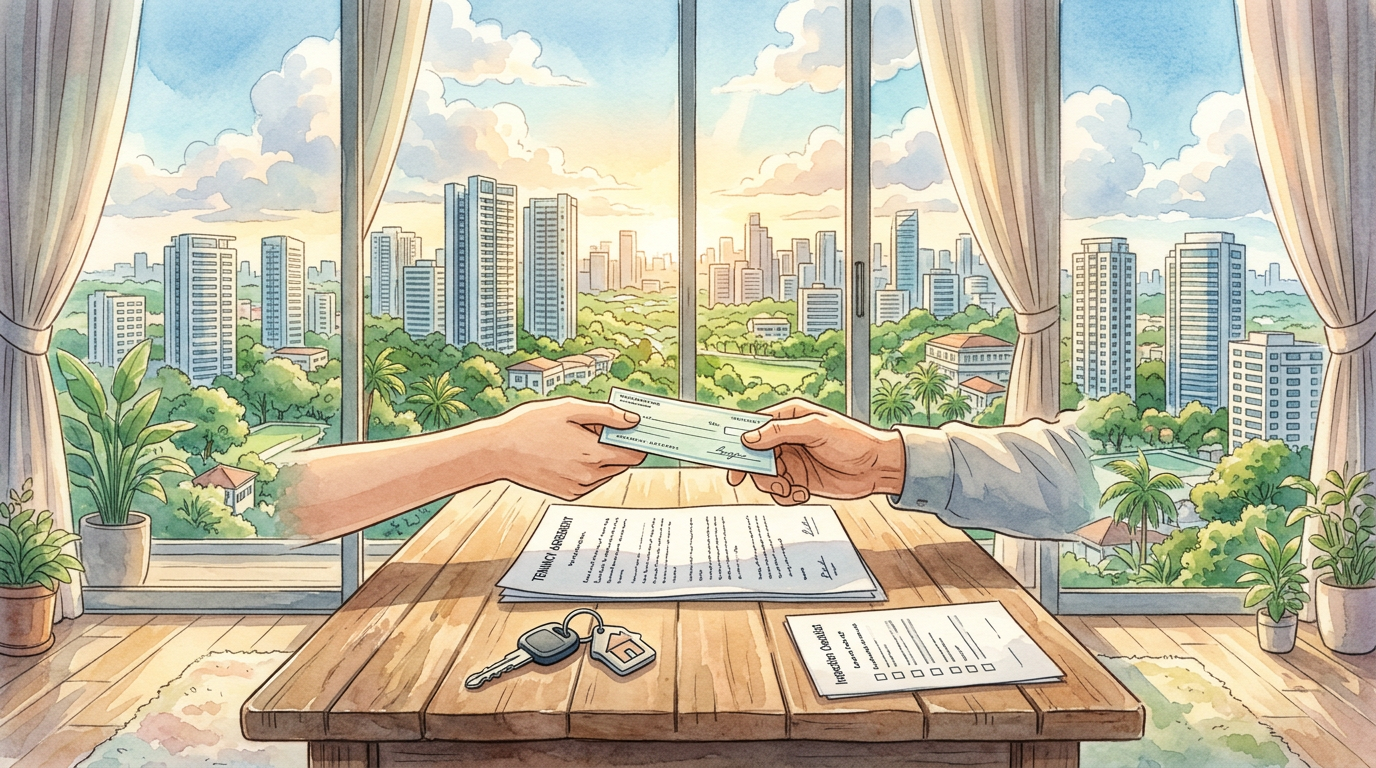
Landlord Entry and Inspection Rights in Singapore Tenancies Explained boils down to one core rule: once you sign a valid tenancy agreement, your landlord cannot enter at will and must give reasonable written notice—usually 24–48 hours—for non-emergency access such as inspections, repairs, or viewings. In Singapore, tenants enjoy legal rights to exclusive possession and quiet enjoyment of the property, while landlords retain a limited right of access that must be clearly set out and exercised under the tenancy agreement. Understanding where the line sits between legitimate inspections and illegal landlord actions is critical for both tenants and investors, and Homejourney’s safety-first approach helps you navigate these rules confidently.
This cluster article supports our broader pillar guide on Singapore tenancy law and tenant protection, giving you a focused, practical breakdown of landlord entry rules, inspection rights, tenant harassment risks, and landlord restrictions in everyday rental scenarios. Whether you’re renting a common-room in a Jurong West HDB, a full unit in Tiong Bahru, or an investment condo in Paya Lebar, the same underlying principles apply—contract terms plus common law, not ad-hoc landlord discretion. Homejourney integrates verified legal information, on-the-ground examples, and user feedback to build a safe, trusted environment for both tenants and landlords.
Landlord Entry Rights: Legal Foundations in Singapore Tenancy Law
Under Singapore tenancy law, a tenant with a valid tenancy agreement enjoys exclusive possession of the premises, meaning the tenant—not the landlord—controls access to the property day to day. This principle arises from common law and is supported by statutes like the Conveyancing and Law of Property Act (CLPA), as well as the terms of the tenancy agreement itself. The landlord’s right to enter is therefore a limited contractual right, usually reserved in the tenancy agreement for specific purposes: inspections, repairs, statutory compliance, or viewings for sale or re-letting. There is no dedicated “tenant protection” statute for entry rights in Singapore; instead, rights come from contract, common law, and general principles such as quiet enjoyment.
In practical terms, most modern tenancy agreements used by agents in central areas like Tampines, Bishan, and Clementi expressly include an access clause. These clauses typically state that the landlord may enter the premises:
- At reasonable hours (often 9am–6pm) for inspections or repairs, with prior notice.
- To comply with statutory obligations—for example, fire safety checks or building management instructions.
- To show the property to prospective tenants, buyers, or valuers near the end of the lease.
Forfeiture and re-entry due to serious tenant breach (e.g. chronic non-payment of rent) are governed by section 18 of the CLPA, which requires a formal notice specifying the breach and giving the tenant an opportunity to remedy and compensate before re-entry. This is distinct from routine inspection rights and is rarely used in everyday residential tenancies, but landlords with investment units in areas like Kallang or Hougang should understand that any re-entry must follow legal procedures, not sudden lockouts.
Notice Requirements: How Much Advance Warning Is ‘Reasonable’?
For non-emergency access, Singapore practice treats 24–48 hours’ written notice as the standard for landlord entry, unless the tenancy agreement specifies a longer period. According to recent guidance and market norms, notice should be written—via email, WhatsApp, SMS, or formal letter—and specify:
- Date and time window (for example, Tuesday 3–5pm).
- Purpose of entry (inspection, air-con servicing, repair, valuation, or viewing).
- Who will attend (landlord, agent, contractor, or building management).
In mature estates like Toa Payoh and Queenstown, many TAs follow a 48-hour norm to respect busy tenant schedules, especially for families with school-going children. Landlords should avoid vague messages like “I’ll drop by sometime tomorrow” and instead agree on a specific slot; tenants are entitled to propose alternative timings if the suggested slot is unreasonable or conflicts with work.
Emergency situations form the key exception. If there is a fire, gas leak, or burst pipe in your HDB flat in Sengkang or your condo in Pasir Ris, the landlord or building management may need to enter immediately to prevent damage or danger. In such cases, prior notice can be waived, but landlords should still inform the tenant as soon as reasonably possible and document what happened—for example, photos of the burst pipe and a brief written log.
What Counts as Illegal Landlord Actions or Tenant Harassment?
Even though landlords own the property, they face specific landlord restrictions on how they can exercise their rights. Common illegal landlord actions in Singapore include:
- Entering the unit or bedroom repeatedly without notice or consent for non-emergency reasons.
- Conducting unannounced “spot checks” or late-night visits that disrupt quiet enjoyment.
- Changing locks or cutting utilities (electricity, water, Wi-Fi) to pressure the tenant to leave.
- Harassing the tenant through constant calls, messages, or in-person confrontations to force early termination.
These behaviours can constitute trespass, harassment, or breach of quiet enjoyment, exposing the landlord to claims for damages or orders from the Small Claims Tribunals (SCT) or the courts. For instance, if a landlord in Yishun repeatedly enters a rented common room while the tenant is at work, checking cupboards or personal belongings, this can amount to tenant harassment and unlawful interference with exclusive possession. Tenants should document incidents with photos, chat logs, and witness accounts, then consider mediation or SCT action if the behaviour continues.
Homejourney’s safety-focused guides on illegal eviction and lockouts provide structured response frameworks if the landlord’s actions escalate beyond improper entry into threats or attempts to force you out without due process. For deeper dispute strategies, see related guides like Illegal Eviction & Lockouts in Singapore: Tenant Response Framework | Homejourney Safety Guide Illegal Eviction & Lockouts in Singapore: Tenant Response Framework | Homejourne... , Illegal Eviction in Singapore: Warning Signs | Homejourney Illegal Eviction in Singapore: Warning Signs | Homejourney , and Small Claims Tribunals for Rental Disputes in Singapore | Homejourney Small Claims Tribunals for Rental Disputes in Singapore | Homejourney .
Practical Inspection Rules for Landlords: How to Exercise Your Rights Safely
For landlords, especially first-time investors with units in emerging hubs like Woodleigh or Punggol Digital District, inspections and repairs are essential to protect asset value. Section 93(1)(a) of the Land Titles Act recognises a landlord’s right to enter to inspect and require tenants to repair defects connected to the state of repair. To keep inspections lawful and relationship-friendly, landlords should follow these practical steps:
- Check your tenancy agreement first. Confirm the access clause: notice period, permitted purposes (inspection, repair, statutory compliance, viewings), and time-of-day restrictions.
- Give written notice 24–48 hours ahead. Use clear, polite language, state the purpose, and propose 1–2 time windows within normal working hours.
- Limit the scope of the visit. If you’re inspecting water damage in the living room of a Bedok condo, don’t expand the visit into checking every wardrobe and drawer without consent.
- Bring only necessary persons. Inform the tenant if an agent, contractor, or valuer will attend; avoid showing up with unannounced groups.
- Document professionally. Take time-stamped photos or brief notes on condition rather than filming the tenant or personal items, which may be intrusive.
For routine maintenance like annual aircon servicing—a common requirement in leases for units near the CBD or East Coast—coordinate with reliable providers and keep a schedule. Homejourney can connect you to vetted service partners through Aircon Services , helping you maintain your property without resorting to surprise spot checks.
Handling Problem Situations: When Tenants Refuse Entry or Landlords Overstep
Disputes often arise when tenants feel their privacy is threatened or when landlords suspect misuse or damage. In Singapore, best practice is to resolve these issues through structured communication first, not immediate legal escalation.
When Tenants Unreasonably Block Access
If a tenant repeatedly refuses access for legitimate reasons—for example, denying entry for essential plumbing repairs in a Clementi HDB corridor unit—landlords should:
- Re-send written notice clearly stating the urgency, any safety risk, and reference to the access clause in the TA.
- Propose multiple time slots, including evenings or weekends if reasonable.
- Offer to be present personally instead of only sending contractors, to build trust.
- Warn politely that continued refusal may be treated as breach of the TA, and that formal remedies may be considered.
If the tenant still refuses, the landlord can explore mediation at the Community Mediation Centre or bring a claim to the Small Claims Tribunals for orders to allow access or for compensation due to damage. For detailed SCT strategies, refer to Security Deposit Disputes in Singapore: Tenant Evidence & SCT Strategy | Homejourney Security Deposit Disputes in Singapore: Tenant Evidence & SCT Strategy | Homejou... and Small Claims Tribunals for Rental Disputes in Singapore | Homejourney Small Claims Tribunals for Rental Disputes in Singapore | Homejourney .
When Landlords Overstep Entry Rights
Tenants who experience repeated unlawful entries or harassment—such as a landlord entering a shared kitchen in Ang Mo Kio daily without notice and commenting on personal items—should:
- Review the TA clause to confirm required notice and permitted purposes.
- Send a written message clearly stating that entry without agreed notice breaches the TA and quiet enjoyment.
- Keep a log of incidents, with dates, times, photos, and chat screenshots.
- Request mediation or consider SCT action if behaviour persists, especially if there’s financial loss or clear distress.
Tenants should avoid changing locks without informing the landlord unless there is immediate safety concern, as this can itself be a breach of the TA. Instead, focus on evidence, communication, and legal pathways. Homejourney’s guides on Tenant Rights During Lease Termination in Singapore | Homejourney Safety Guide Tenant Rights During Lease Termination in Singapore | Homejourney Safety Guide and How to Handle Landlord Disputes in Singapore | Homejourney How to Handle Landlord Disputes in Singapore | Homejourney outline structured dispute-handling frameworks that emphasise safety and documentation.
Legal Remedies: From Mediation to Small Claims Tribunals
Singapore’s rental system relies heavily on contract enforcement through civil processes. There is no rent control, and no separate residential tenancy court; disputes are usually handled at the Small Claims Tribunals or via standard civil court actions.
The Small Claims Tribunals (part of the State Courts) typically handle landlord–tenant disputes up to S$20,000, or S$30,000 if both parties agree. Claims can include damage recovery, unpaid rent, or compensation for breach of the TA, such as unlawful entry causing loss or distress. Before filing, parties are encouraged to attempt negotiation or mediation, including at the Community Mediation Centre for neighbour-type conflicts in dense estates like Bukit Merah and Hougang.
Serious disputes—such as alleged trespass combined with physical threats—may require police reports and legal advice from a lawyer experienced in property and tort law. Landlords considering forfeiture and re-entry due to rent arrears must comply with CLPA section 18, issuing a proper notice and giving time to remedy, rather than attempting self-help evictions. For eviction-related issues, see How to Respond to an Eviction Notice in Singapore | Homejourney Safety Guide How to Respond to an Eviction Notice in Singapore | Homejourney Safety Guide .
Best Practices for Safe, Trust-Based Tenancies
Because entry and inspection rights sit at the intersection of privacy and asset protection, good practices on both sides can prevent disputes. Homejourney encourages the following frameworks for safer tenancies:
For Landlords
- Use a clear, detailed tenancy agreement. Include a specific access clause: 24–48 hours’ written notice, permitted purposes, reasonable hours, and emergency exceptions.
- Screen tenants carefully. Check references, employment, and rental history, especially for higher-end units in Orchard or River Valley, where furnishings may be costly.
- Adopt a documentation system. Keep a digital log for inspections, repairs, and notices, including photos and invoices, to avoid later disputes.
- Consider insurance. Explore landlord insurance covering damage, loss of rent due to major issues, and liability, especially for investment properties.
Investors planning to buy and rent out units can review current project data and area performance via Homejourney’s Projects Directory and then assess financing options using Mortgage Rates or Bank Rates . With reliable financing and tenant management strategies, you reduce the pressure to over-inspect or micro-manage tenants.
For Tenants
- Read the access clause before signing. Ask for clearer wording if notice periods or inspection frequency are vague.
- Set expectations upfront. During handover in areas like Jurong East or Serangoon, discuss how often the landlord expects to inspect and agree on a reasonable schedule.
- Keep the unit in good condition. Regular cleaning and prompt reporting of issues reduce the landlord’s anxiety and need for frequent checks.